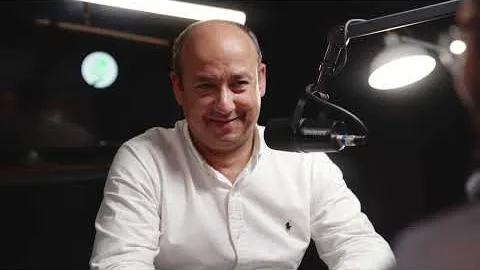
The robots were moving, but the customer’s operating logic was missing. Javier Solanilla uses that early experience to explain the problem Moontech Industrial Solutions set out to solve. A fleet can contain capable machines and still fail to deliver a useful, coordinated process.
As Director of Operations, Solanilla describes work stretching from project development and commercial discussions to execution and after-sales support. His focus is on the software and practical understanding that connect a customer’s requirements with the equipment on the factory floor.
Solanilla places the company’s origins in an automotive project within its wider industrial group. Approximately fifty automated guided vehicles needed to work together, but the operating logic of the customer had not been adequately translated into the system.
The opportunity was to combine industrial experience with programming knowledge. Understanding the production environment made it possible to see why technically functional vehicles were not enough. The project needed a coherent account of what the operation required them to do.
Although Moontech initially developed a type of vehicle to meet particular requirements, Solanilla describes software and turnkey project delivery as its strategic focus. The intention is to apply operational knowledge across suitable machines from different manufacturers.
Why is project definition so important?
A request to carry a pallet from one point to another can hide several other activities. The empty pallet may need to return. The load may need to be wrapped. Another destination or an intermediate handling step may change the route and the equipment required.
Solanilla argues that these details should be understood during the commercial and design stages. Otherwise, a supplier can price one project and discover a different one after it has been awarded. The resulting problems may be blamed on the robot even when the original difficulty was an incomplete specification.
Good definition also influences hardware selection. Whether a machine needs to lift a load is not a small detail that can be resolved later. It can determine the type of machine the application requires.
What value does software add?
For Solanilla, software turns an understanding of the customer’s operation into coordinated action. It manages the rules that make a fleet useful within a particular environment, rather than treating each vehicle as an isolated product.
He expects hardware to become increasingly available from a range of suppliers. In that setting, the ability to connect equipment with the customer’s processes becomes an important source of value. Moontech’s approach is to retain that operational knowledge while working with manufacturers whose machines suit the application.
He also describes demand from customers who already have equipment from two brands and want to add a third. Their concern is whether the machines can work together. A communication layer must therefore support the customer’s future choices as well as the immediate project.
Is the integrator also a consultant?
Solanilla considers consultation inseparable from delivering a solution. To recommend a machine, a fleet manager or a turnkey installation, a supplier must understand the sector, the available technologies and the surrounding industrial systems.
That can mean questioning the first process a customer wants to automate. Another flow may provide a better return or make the operation easier to organise. The purpose of the discussion is to identify the useful project, rather than merely execute the first proposed movement.
His automotive background has been demanding in this respect. Strict requirements and extensive preparation create pressure, but they also build experience that can be applied in other sectors, including warehousing and pharmaceuticals.
Why begin with a pilot?
Large projects can make sense when a company has a mature understanding of its needs. For less experienced users, Solanilla recommends smaller trials that allow teams to become familiar with robots moving through their plant.
A pilot is also a way to build confidence. People can observe the equipment, learn how it interacts with their work and become more comfortable with a broader deployment. The technical project and the organisation’s readiness need to develop together.
He distinguishes between established manual facilities and new buildings or expansions. A new operation provides an opportunity to consider automation from the beginning. Retrofitting an existing process involves habits, layouts and alternatives that are already in place, which can make the decision harder.
What makes collaboration commercially useful?
Solanilla sees room for manufacturers, integrators and software specialists to cooperate. Moontech can choose a partner’s machine when it is suitable for the customer, while contributing its own integration and software capabilities.
The same approach matters after installation. A customer needs someone who can respond locally when a component needs replacing or a system requires attention. A supplier based far away cannot assume that it can provide rapid physical support everywhere by itself.
International growth therefore depends partly on building dependable local relationships. The quality of a project includes the service available once the installation is operating, not just its initial technical performance.
Which challenges point to the next opportunities?
Solanilla discusses projects beyond conventional factory transport, including port intralogistics and automated truck loading and unloading. These examples broaden the scope of mobile robotics while illustrating why standardisation matters.
Different loading docks, trailers and reference points make automated handling more difficult. A machine must navigate, position itself and recognise how to approach the material in each environment. The prospect of automation is attractive, but the physical variations need to be addressed.
Labour availability is another pressure. Some customers, he explains, are considering automation because they struggle to recruit people for existing transport tasks. That makes the central question especially practical: how can the business keep its flow of materials working reliably?
Frequently asked questions
Why can a mobile robot project fail despite good hardware?
The process may be poorly defined or the software may not reflect the customer’s operating logic. Solanilla puts early specification and integration at the centre of delivery.
Can different robot brands work together?
That is a key objective of mixed-fleet integration. Compatibility, interfaces and the actual operating requirements must still be assessed for each project.
Why does local after-sales support matter?
An operating facility needs timely maintenance and repairs. A local partner can provide physical assistance that a distant supplier cannot always deliver quickly.