Building a Mobile Robot: Benedex on the Make-or-Buy Decision
Benedex founders explain how modular wheels, configurable mobile bases and motion-control software shape the decision to build or buy a robot platform.
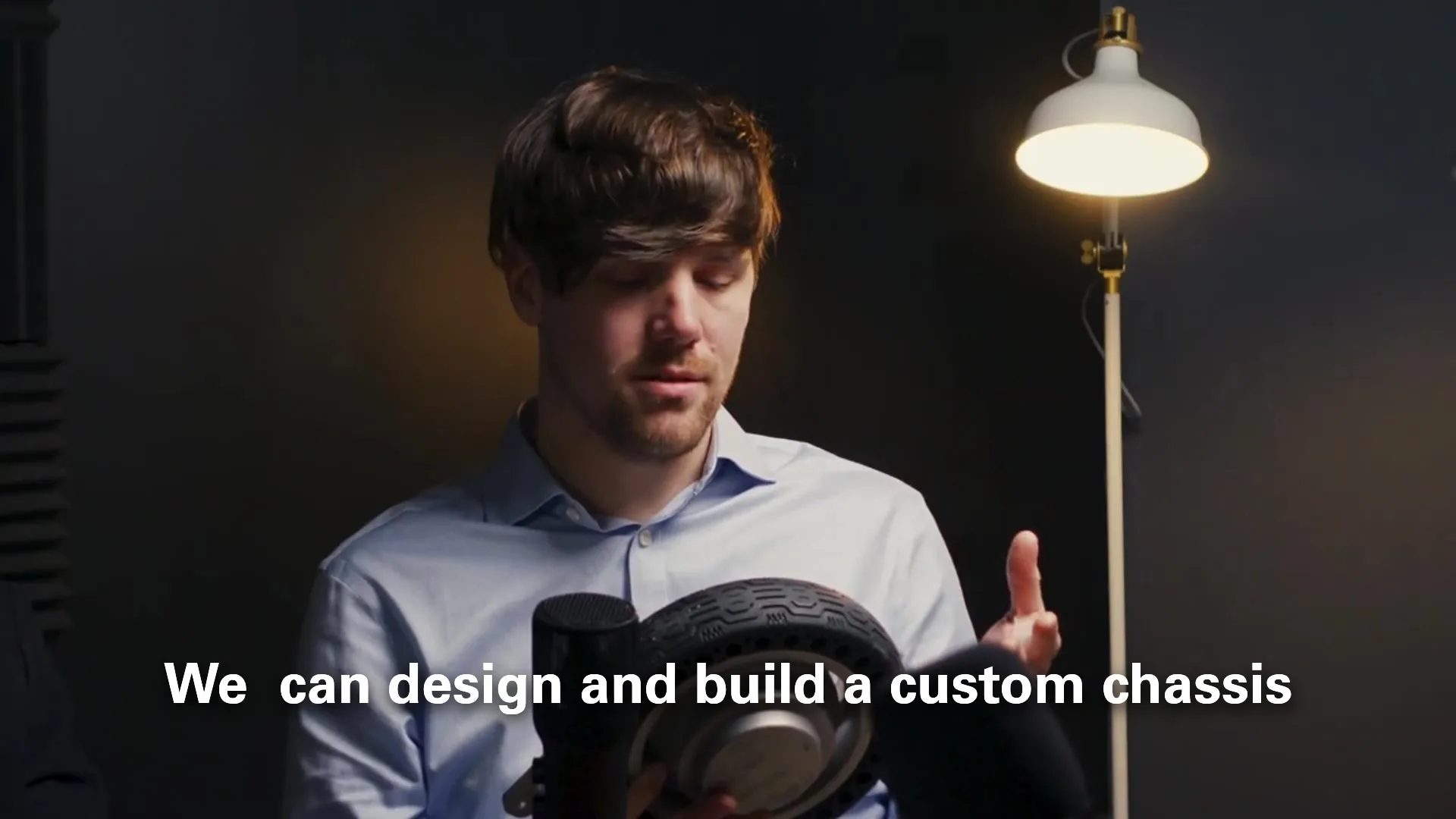
Snir Benedek and Thomas (Tom) Finch in conversation with Industry Focus. Image: Industry Focus.
Mobile robot developers often begin with a distinctive application: a security payload, a delivery system or a new way to move goods. The mobile base underneath it can become a separate engineering programme, demanding expertise in mechanics, electronics and motion control before the application reaches a customer.
In this Industry Focus interview, Benedex founders Snir Benedek and Thomas Finch, known as Tom, explain their approach to that problem. Their proposition combines modular wheel technology, configurable chassis and motion-control software so that a robot builder can concentrate more effort on the task its machine is designed to perform.
The discussion centres on a practical purchasing decision: how much of a mobile robot should a company develop itself, and which capabilities can it obtain from a specialist supplier?
What belongs at the centre of a mobile robot project?
Benedek starts with the functional payload. A robot carries something that performs a particular job, and that job is often where the customer’s expertise and commercial value lie. The company developing the application may understand inspection, security or material handling exceptionally well without wanting to become a specialist in every aspect of vehicle motion.
Finch brings an electrical-engineering background and experience designing mobile platforms for automotive manufacturers. Benedek describes a career spanning research engineering and commercial robotics. Their shared argument is that development teams should make an explicit decision about where to concentrate their resources.
For the prospective buyer, that means defining the work the robot must do before choosing a base. The payload, the required movement and the operating environment should shape the platform, rather than being adjusted late in development to accommodate an unsuitable purchase.
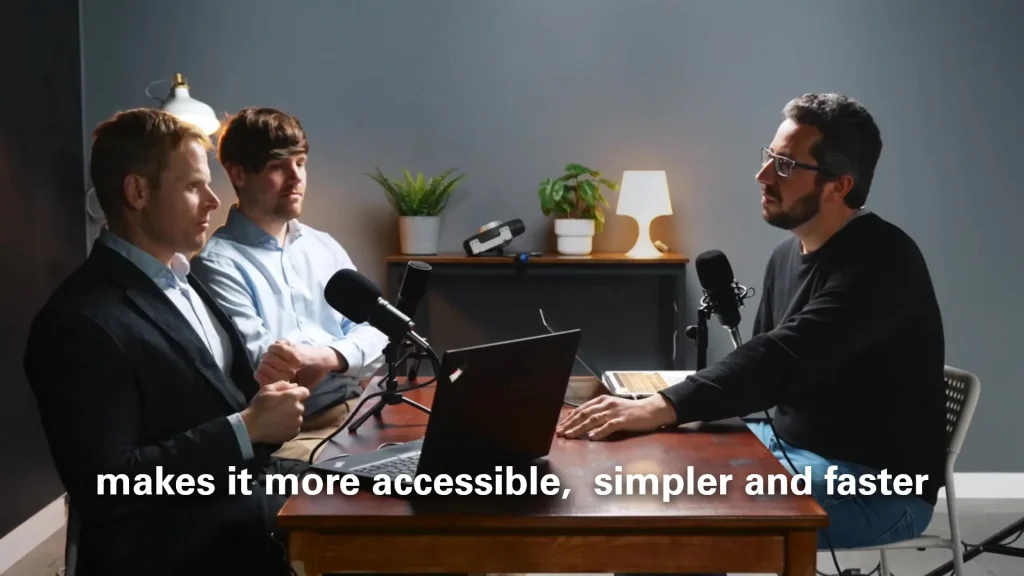
Snir Benedek and Thomas (Tom) Finch speaking to Industry Focus. Image: Industry Focus.
Where does the make-or-buy compromise appear?
Finch describes two familiar routes. An off-the-shelf mobile base can provide an established starting point, but its shape, dimensions or functions may impose compromises. A fully in-house design can fit the application more closely, while requiring substantial development time and investment.
Benedex positions its modular approach between those routes. Its aim is to retain reusable engineering while allowing the physical and motion characteristics of the platform to change for a particular application. That is a supplier proposition rather than evidence that one route is always cheaper or faster. The appropriate choice still depends on the requirements and capabilities of the development team.
The distinction matters when comparing proposals. A standard base and a configurable platform may appear to serve the same purpose, but they can leave very different amounts of integration work with the customer. The interview encourages developers to consider that remaining work alongside the component purchase itself.
How do modular wheels translate into a working platform?
Finch describes an integrated wheel unit as the foundation of the system. Individual units can form part of a kit for mobilising a platform, or Benedex can use them in a custom chassis. The discussion includes differential steering, caster arrangements and mecanum configurations.
This flexibility concerns how the platform moves as well as what it carries. A particular application may require a different wheel arrangement or chassis from another project, even when both are described broadly as mobile robots.
The examples span several stages of development. Finch reports wheel technology being used to mobilise a forklift application and complete platforms supplied for security uses. He also describes development projects intended for last-mile delivery. Those delivery projects are presented as work under development, rather than established deployments or independently measured commercial successes.
Why is the software as important as the wheel?
Benedek identifies the configuration software as the element that brings the hardware together. The software accommodates different wheel arrangements and motion configurations, allowing reusable motion-control work to support a range of platforms.
His underlying point is that a mobile base is a coordinated system. Mechanical components, electrical design, electronics and software must work together. Supplying individually capable parts does not automatically resolve the interactions between them.
For a development team, this changes the supplier conversation. Questions about the wheel or drive are only one part of the evaluation. The team also needs to understand how the proposed configuration will be commissioned and how the mobile base will fit into the rest of its robot. The interview does not provide comparative commissioning data, so its claims of faster deployment should be assessed against a specific project rather than treated as a universal benchmark.
What does the warehouse example demonstrate?
Benedek describes work with an unnamed UK robotics manufacturer on a warehouse logistics and automation system. He identifies budget constraints and the need to optimise system performance as the central challenges.
The account illustrates the type of engineering trade-off Benedex aims to address: adapting a platform to a customer application while managing commercial constraints. It does not disclose the customer, project specifications, final costs or measured operational improvements. It therefore provides context for the company’s approach, rather than a quantified case study that another buyer could reproduce directly.
The practical lesson for robot builders
The interview’s most useful distinction is between ownership of the application and ownership of every underlying technology. A business can retain control of its specialist payload and customer proposition while obtaining part of the mobility system from a supplier.
Whether that makes sense depends on the application. Teams evaluating a modular platform should establish which requirements it already supports, which need configuration and which would require additional development. That gives the make-or-buy decision a concrete basis and helps prevent the mobile base from absorbing effort intended for the robot’s core task.
Frequently asked questions
What does Benedex Robotics supply?
The founders describe modular wheel technology, configurable mobile platforms and motion-control software for organisations building mobile robotic applications.
Why might a developer choose a configurable mobile base?
A configurable base may accommodate application requirements that a fixed off-the-shelf platform cannot easily meet, while reusing engineering that a fully bespoke design would require the developer to create.
Does modular hardware remove the need for systems engineering?
No. Benedek stresses the interaction between mechanics, electronics and software. The intended benefit is to package part of that engineering into a reusable system, not to eliminate integration work.
Are the interview’s cost and deployment claims independently quantified?
No comparative cost or commissioning dataset is provided. Those claims should be tested against a defined project and its required configuration.
Free membership
Keep reading — it’s free.
Join with your company email to read every case study, interview and article in full. No payment, no card.