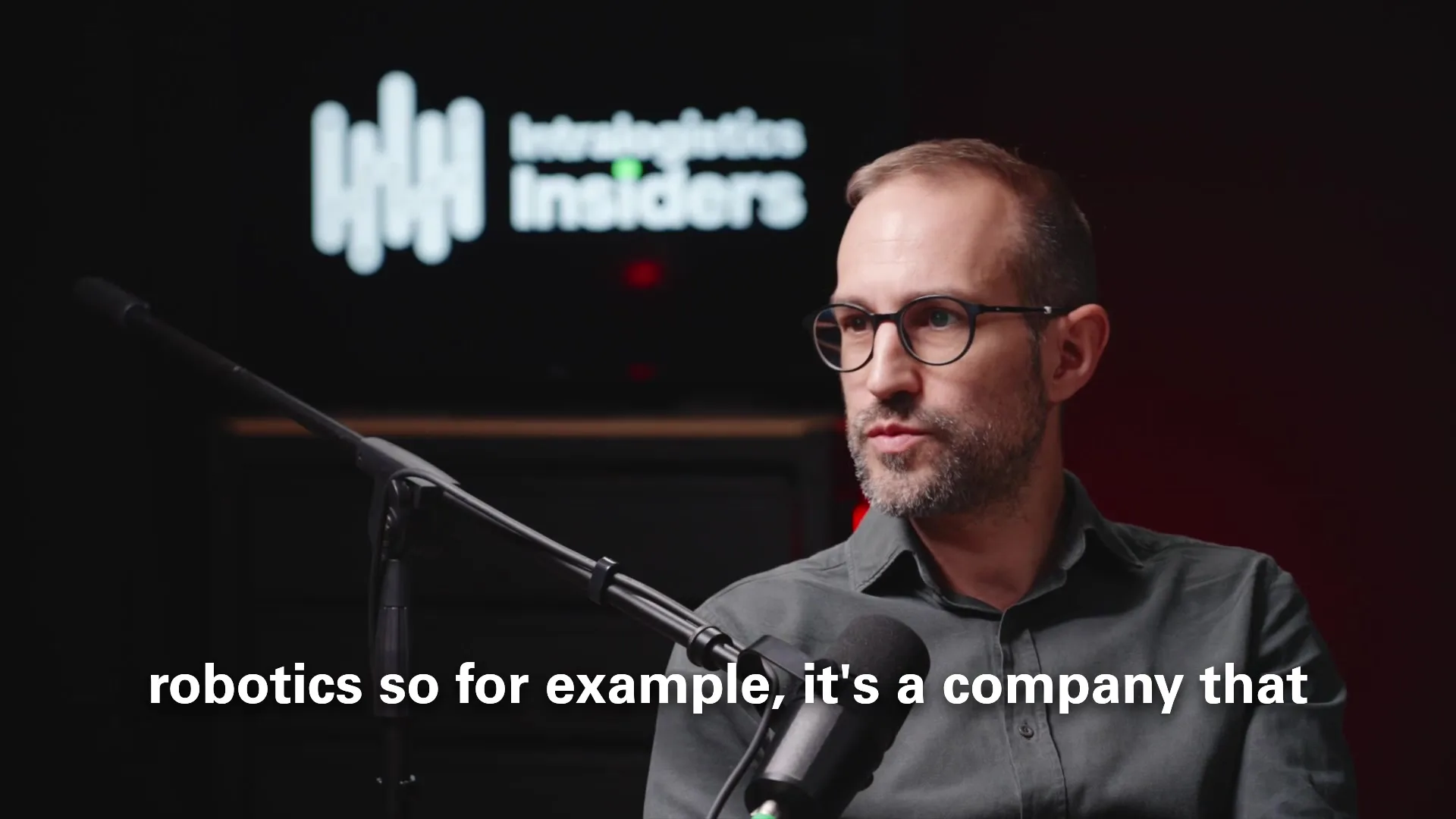
A mobile robot investment can look unconvincing if its business case counts only the wages associated with a transport task. The calculation changes when a company includes delivery errors, production interruptions, service levels and the cost of maintaining equipment throughout its life. That broader view runs through this interview with Luisa Llompart, recorded while she was CEO of Kivnon.
Llompart subsequently announced that she had left the role. Her comments here reflect the responsibilities and company context at the time of the conversation, offering a practical framework for industrial leaders considering mobile automation.
Llompart trained in telecommunications engineering and describes a career connecting software with physical products. Her experience includes automotive work at BMW, IoT product development at Telefónica and mobile robotics through ASTI and ABB.
Across those settings, she identifies a recurring interest in learning new technology and solving a new customer problem. Product development matters because it supports today’s business while creating the basis for future growth.
In a leadership role, that focus must be combined with operational delivery and financial discipline. Robotics businesses consume substantial resources, she notes, and technological enthusiasm can distract from what customers actually need and will pay for. A technically impressive product still has to find a suitable market and arrive at a useful time.
Internal transport is part of production reliability
Llompart describes Kivnon’s work as helping move materials and products within industrial and logistics facilities. That can mean connecting a warehouse to production, moving work between stages or supporting order preparation.
The operational importance becomes clear when a production station is waiting for the correct material. A delayed or incorrect delivery can disrupt work far beyond the transport task itself.
The same applies to order fulfilment. Moving a load efficiently does not help if the load contains the wrong products. In her account, internal logistics supports the reliability of the wider business, making it a matter of customer service and competitiveness as well as movement.
Choose AGVs and AMRs around the application
Asked about choosing between automated guided vehicles and autonomous mobile robots, Llompart starts with the task. Load size, weight, the production process and timing requirements all influence the decision.
For a process that needs material at a defined interval, predictable delivery is essential. A more flexible navigation concept is useful only if the complete solution still meets that operational requirement.
Customers also bring different levels of experience. Some already run large fleets and know precisely what additional equipment they need. Others are installing their first mobile robots and need help understanding the options. Llompart describes advice and integration as important parts of serving both groups, with customisation where the load or surrounding process requires it.
The robot cannot repair a broken information flow
One of the interview’s clearest points concerns operational discipline. Llompart distinguishes technical integration from the daily practices needed to keep the system working.
Aisles must remain usable. Loads must be presented correctly. The information identifying a product and its destination must be reliable. If an incorrect load enters the process, automating its transport will not make the final delivery correct.
This puts attention on the surrounding value chain. Software connections, traceability and the behaviour of the people interacting with the equipment all influence performance. A robot may execute its movement successfully while the business still fails to achieve the intended outcome because another part of the process is uncontrolled.
Count errors and service performance in the return
Llompart illustrates the limitations of a labour-only calculation through a conversation with a pharmaceutical business in Latin America. The potential customer questioned the return because local labour costs were lower than in Europe.
She then explored order errors. In the example, an incorrect delivery could require the pallet to return to the facility for rework, rather than being resolved with a simple partial shipment. That creates costs in transport, checking and order preparation, as well as an impact on the customer.
The example does not establish a fixed return for every project. It shows why the assessment should follow the actual operation. Better traceability, fewer mistakes and more reliable delivery can matter alongside direct labour savings, especially when competing suppliers offer faster or more flexible service.
Look beyond the initial purchase price
Llompart also stresses total cost of ownership. The initial budget covers only the beginning of the equipment’s working life.
Maintenance, repairs and spare parts can affect the economics over many years. A purchasing decision based only on the robot’s acquisition cost may miss differences in the support needed to keep it operating.
The performance measures should also follow the company’s objectives. A business seeking shorter delivery times needs to measure that outcome; one seeking greater production flexibility needs to assess whether the new system supports it. Secondary benefits may emerge, but the main investment question should remain connected to the problem that prompted the project.
Discuss employment changes honestly
Llompart does not dismiss concerns about jobs. She acknowledges that replacing a manual transport task with a robot can remove the need for that particular activity, and that not everybody will move easily into a new role.
At the same time, automated systems create demand for maintenance, inspection, development and the supervision of operational information. Fleet software can allow people to monitor equipment and respond to exceptions rather than perform every transport movement themselves.
Her position is that the transition needs to be recognised rather than hidden. Management alignment and communication help introduce the change, but the employment discussion remains real. The interview’s business argument is therefore more nuanced than a promise that every automation project leaves all existing tasks unchanged.
Separate useful AI from broader expectations
Llompart describes physical AI as intelligence applied to machines that act in the world. She points to vision, inspection, picking and aspects of mobile navigation as areas where useful capabilities already exist.
She also distinguishes those applications from the expectation of an all-purpose humanoid able to handle every industrial situation. More specialised developments may contribute towards broader capability over time, but she does not present that future as a completed reality.
For an industrial buyer, this distinction helps bring the discussion back to the intended task. An AI feature is valuable when it improves a specific part of the operation, such as recognising an obstacle or accommodating variation in how a load is positioned.
Begin with the problem that matters most
Llompart’s advice is to identify where the business most needs improvement, seek relevant expertise and begin with a manageable application when uncertainty is high. Visiting other facilities or consulting an experienced supplier can make the options easier to evaluate.
A pilot should have a clear operational purpose, rather than exist simply to demonstrate interest in robotics. The broader message is to develop an automation plan around measurable business needs, then expand from evidence of what works.
Frequently asked questions
Was Luisa Llompart Kivnon’s CEO when this interview was recorded?
Yes. She was introduced in that role during the conversation and later publicly announced her departure. The interview reflects her position at the time we spoke, not a claim about her current employment.
Is labour reduction the only source of return?
No. Llompart discusses errors, rework, delivery speed, traceability, flexibility and ownership costs as relevant parts of the business case.
Is an AGV or an AMR always the better choice?
Neither is presented as universally preferable. She bases selection on the load, process, timing requirements and the complete operating environment.