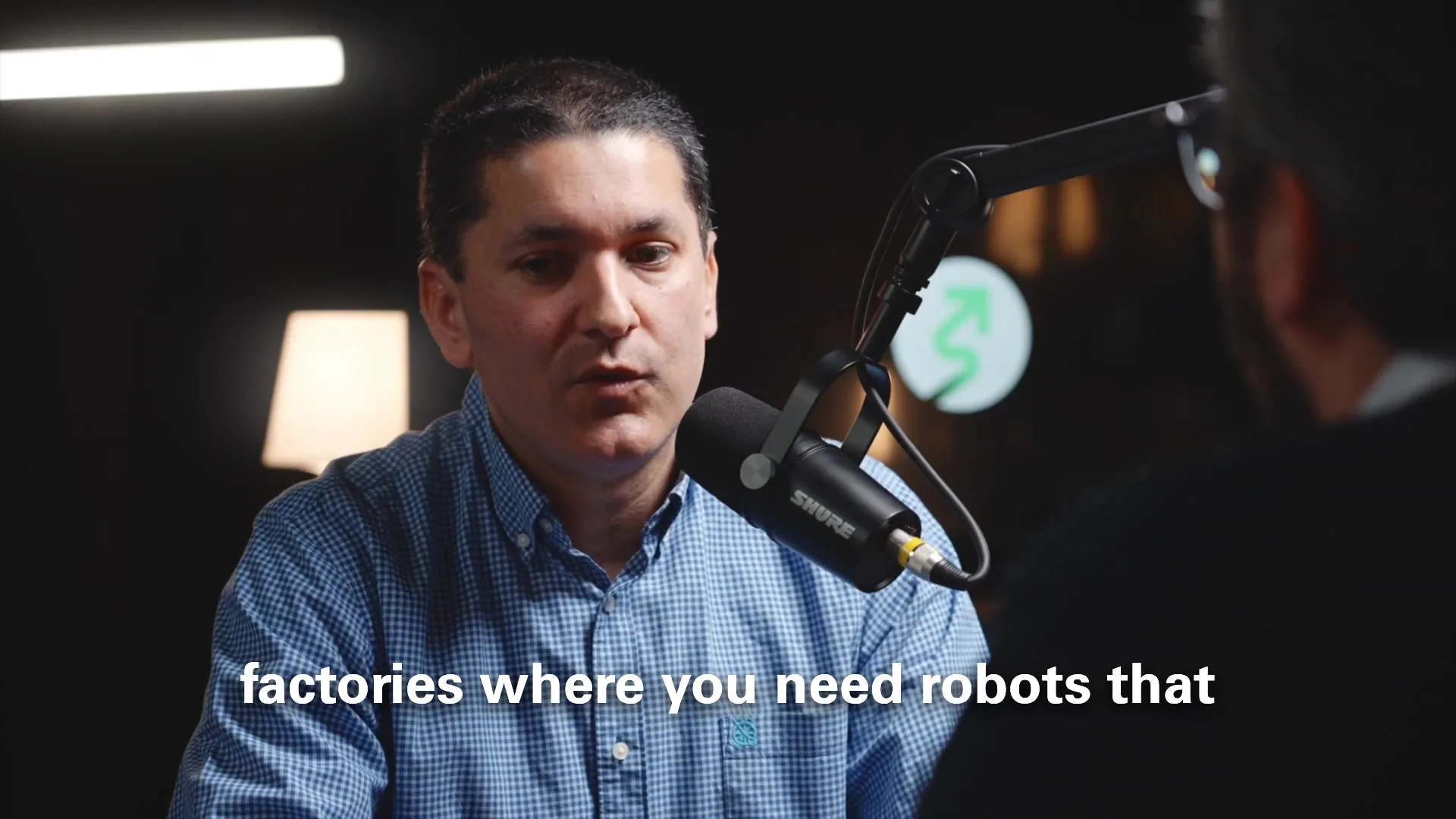
For a company supplying advanced scientific equipment, a successful design is only one part of the challenge. Customers must also believe that the organisation can finance, build, validate and deliver it over a demanding project cycle. Miguel Ángel Carrera, introduced in this interview as founder and CEO of AVS, explains how that combination shaped the company’s development.
His account connects equipment for space missions, particle accelerators and fusion research with less visible business decisions: how to fund growth, retain specialist suppliers and build capabilities before a major programme needs them. The common thread is a willingness to take responsibility for difficult engineering problems over the long term.
Carrera describes AVS as a business created to solve complex problems for large scientific facilities. Its work centres on mechatronic systems operating under difficult conditions, often with little or no opportunity for maintenance.
The founders initially used engineering work in machine tools to support their move into scientific markets. It was a deliberate transition: one activity paid the bills while another established the capabilities and relationships needed for their intended specialism.
Two early principles helped preserve that direction. Carrera says the company avoided placing personnel inside customers simply to sell engineering hours. It also committed to supplying complete, turnkey equipment. That forced AVS to expand beyond its mechanical foundations into electronics, software, integration and project management. The business model demanded broader responsibility, and the organisation had to grow to match it.
Connecting different markets through difficult environments
Space, accelerators and fusion may appear to be separate industries. Carrera links them through precision engineering and equipment that must function in challenging environments, including vacuum, radiation and extreme temperatures.
Those conditions make reliability and verification central to the work. Equipment inside a major scientific installation or operating on another planet cannot be treated like an easily accessible machine on a factory floor.
The shared technical foundation also gives AVS room to develop across markets. Carrera describes moving from supplying subsystems towards responsibility for larger systems and, in some areas, complete platforms. He is careful about the scope of that ambition: in fusion, the goal he discusses is supplying important systems useful across reactor programmes rather than building an entire reactor.
What the Perseverance programme changed
AVS’s involvement in the Perseverance Mars rover provides the interview’s clearest example of technology and organisational credibility developing together. Carrera describes contributions associated with the MEDA and SuperCam instruments and the long effort required to demonstrate that the company could deliver.
The opportunity began with identifying specific technical problems and proposing solutions. It then required repeated demonstrations under relevant conditions. In Carrera’s account, technical ingenuity opened the discussion, but the validation process and the company’s commitment kept it involved.
He describes equipment operating on Mars as a powerful reference when discussing future work. That achievement gave prospective partners evidence beyond a presentation or a promising concept. For a specialist supplier entering demanding markets, a successful mission can change how the company itself is assessed.
Growing at the pace of the programme
Carrera does not describe readiness as something a young business possesses all at once. He explains that AVS had to develop the personnel, technology, integration capability and financial capacity needed for future milestones.
Project duration matters to that process. Some scientific equipment programmes turn over more quickly than space or fusion projects, which can run for many years. In his account, combining different kinds of work helped support the longer development path.
This is also why he resists compressed expectations for hardware ventures. Understanding a market, building equipment and proving it in demanding conditions takes time. His emphasis is on preparing systematically for a future opportunity while remaining realistic about the resources needed to reach it.
Recruiting around the work and the people
The same long view applies to recruitment. Carrera describes a geographically distributed company partly shaped by where specialist talent can be found and where people want to live.
Scientific customers also help make the work visible. Research publications and conferences expose potential recruits to the equipment and projects in which AVS participates. That can attract people who specifically want to contribute to scientific discovery rather than simply move into another engineering role.
Carrera values enthusiasm for the mission, but also acknowledges the organisational friction of a smaller multinational business. Large and uncertain project awards can make workload planning difficult. People joining the company need to understand both the appeal of unusual technical challenges and the practical demands that accompany them.
Treating suppliers as part of the capability
In Carrera’s account, suppliers receive information about where AVS is heading, what technologies it expects to need and how its requirements may change. The relationship includes feedback about cost, quality and performance, alongside listening to what suppliers need from AVS.
He also stresses continuity. A critical supplier may not fit neatly into every year’s project mix, but allowing the relationship to disappear can weaken future delivery. He describes seeking work that helps preserve important supplier capabilities through quieter periods.
This approach treats the supply chain as part of the company’s accumulated engineering capacity. Certifications, manufacturing skills and mutual understanding take time to develop. Preserving them matters when the next demanding programme arrives.
Staying flexible without losing financial visibility
As AVS grows, Carrera sees a tension between useful organisation and excessive rigidity. The company needs to understand project performance and the resources available for future investment, yet he wants room to reconsider designs and working methods.
His comments on AI follow a similarly selective approach. He describes examining processes across the organisation to identify where the technology can genuinely help. Documentation and information searches are examples of work that could consume less engineering time, leaving more capacity for creative problem-solving.
The objective is to improve a defined activity, rather than introduce AI everywhere. That fits the broader argument of the interview: ambitious technical goals depend on specific capabilities, careful preparation and a clear reason for each investment.
Long-term ambition needs nearer milestones
Carrera’s future interests include in-orbit servicing, advanced radiotherapy equipment and critical systems for fusion. He presents these as areas of ambition, each with its own demanding route to meaningful deployment.
For the team, he argues, distant goals also need shorter milestones that make progress visible. The appeal of working on major scientific challenges must be matched by opportunities to develop along the way. AVS’s story is therefore as much about sustaining an organisation as it is about designing an instrument.
Frequently asked questions
What connects AVS’s main markets?
Carrera identifies precision mechatronics and reliable operation in difficult environments as common capabilities across space, accelerator and fusion work.
Why was the Mars programme important?
Beyond the technical achievement, Carrera describes it as evidence that AVS could withstand demanding validation and delivery requirements. That strengthened the company’s credibility for subsequent opportunities.
What is his central advice for hardware businesses?
Allow time to understand the market and build the organisation required to serve it. In the interview, long-term positioning, supplier continuity and realistic capability development are recurring priorities.