Tobias Ortmaier: Bring Modern Software Development Into the Automation Cell
voraus robotik co-founder Tobias Ortmaier discusses middleware, open interfaces, simulation and modern software tools for automation cells.
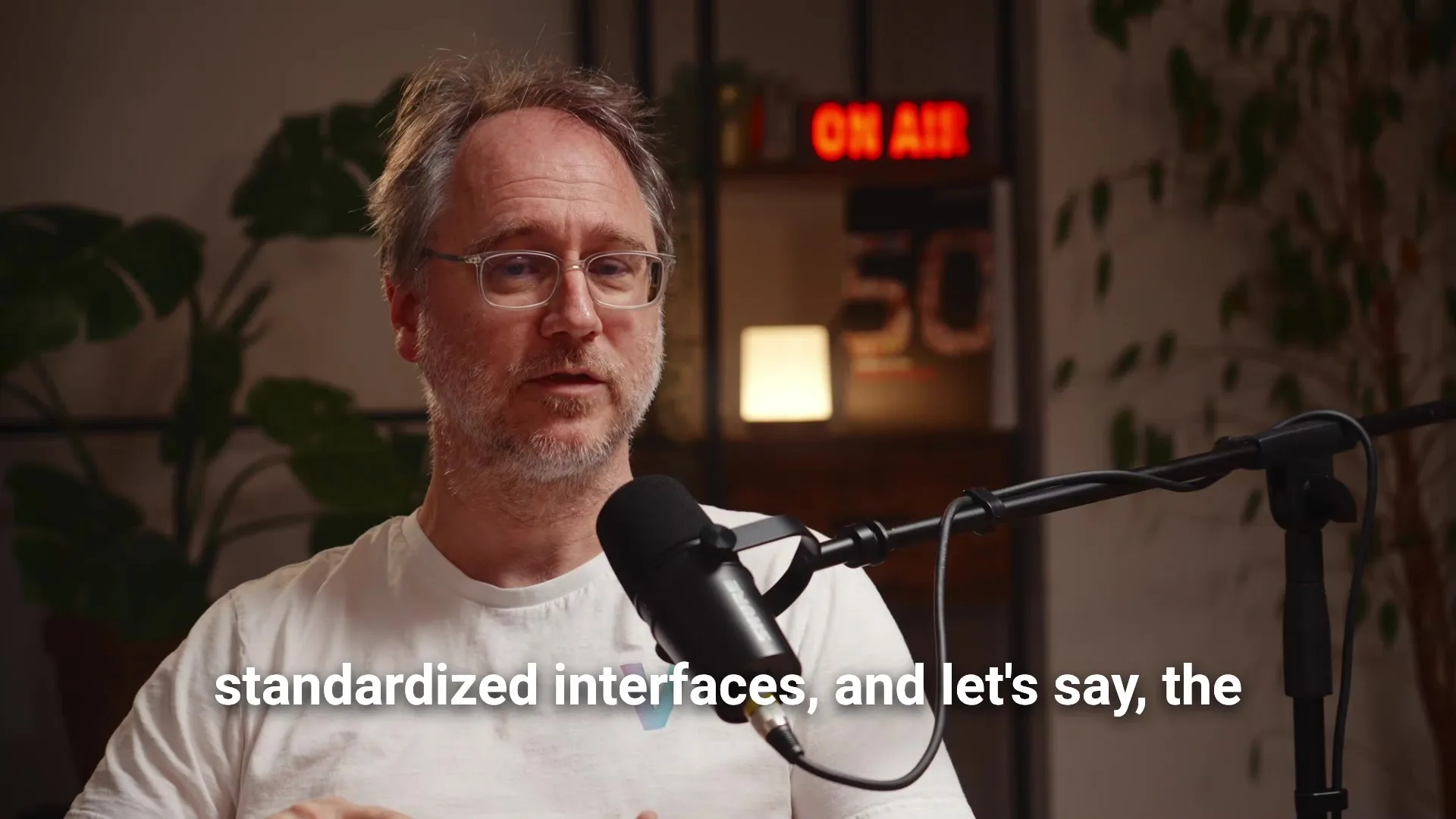
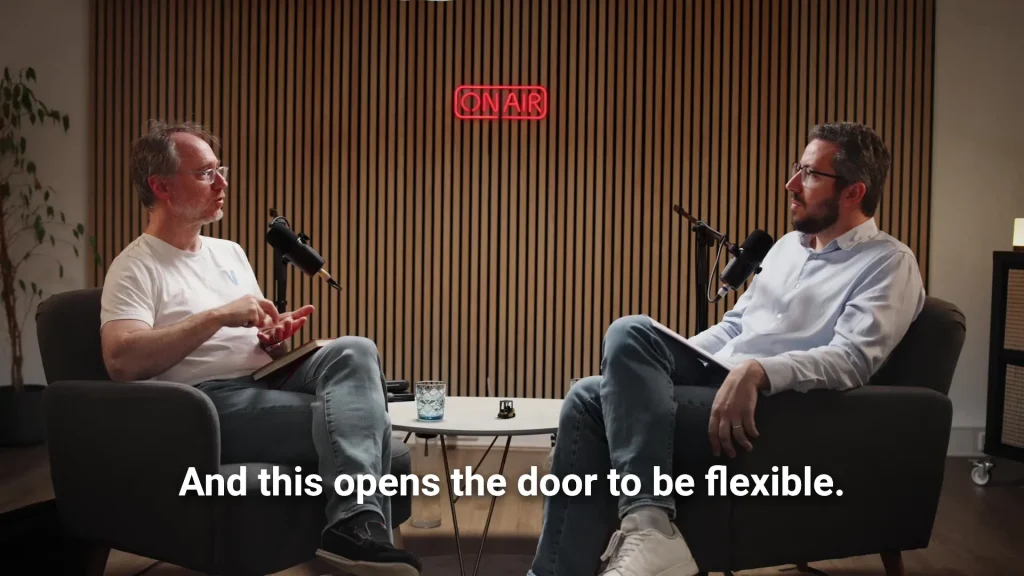
Prof. Dr.-Ing. Tobias Ortmaier in conversation with Industry Focus. Image: Industry Focus.
An automation cell can contain a robot, a gripper, a camera, conveyors and a PLC, each with its own programming environment. The engineering challenge is making those components work together and keeping the system adaptable after commissioning. In this Industry Focus interview, Tobias Ortmaier explains why that software problem became the focus of voraus robotik.
The company began by developing a collaborative robot before shifting toward automation software, a history also documented on its official company page. Ortmaier describes a goal of bringing familiar software-development tools into operational technology: version control, testing, reusable interfaces and a more manageable path from simulation to the real machine.
The cell is bigger than the robot
Ortmaier traces the company’s software approach to the experience of developing a complete cobot. Its programming interfaces attracted interest, but the larger opportunity involved the surrounding equipment as well.
A robot performs only part of an automation task. It may depend on a camera to locate an item, a gripper to handle it and a conveyor to deliver the next one. Each component can introduce another interface and another need for specialist knowledge.
Ortmaier sees that fragmentation as a constraint on development. If every device requires a different expert and toolset, changing the cell becomes expensive and slow. The problem grows when demand for automation increases without a corresponding increase in available specialists.
The aim he describes is to make a broader set of software skills useful in automation. A high-level programming interface can help developers coordinate equipment without forcing all application logic into a separate proprietary language for each component.
Prof. Dr.-Ing. Tobias Ortmaier speaking to Industry Focus. Image: Industry Focus.
Middleware connects several layers of the system
Ortmaier explains the software through layers. At the lower level are drivers and interfaces to equipment. Above that sits application logic, which can be provided by the supplier or developed by the customer. User interfaces, dashboards and graphical programming tools expose relevant functionality to people.
Connections to warehouse-management or enterprise systems can then link the cell to the wider operation. This makes the middleware a means of coordinating work across components rather than simply another screen for a robot.
The depth of integration varies. Ortmaier describes close cooperation with some manufacturers that allows low-level interaction, while other robots are controlled through interfaces their suppliers already provide.
That distinction is important for buyers. Hardware independence is a design objective, but the available interface still determines what can be done with a particular device. A project should establish the actual supported behavior, not assume every component becomes interchangeable without engineering work.
Use established development tools where they help
Ortmaier argues that automation developers should be able to use existing software tools rather than be confined to a supplier-specific development environment. He cites static code analysis, automated testing and version control as examples.
These practices support a more disciplined way to change software. Engineers can track revisions, check behavior and build repeatable development processes. The value becomes particularly relevant when an automation cell must evolve rather than remain unchanged for years.
His argument does not make industrial expertise unnecessary. Developers still need to understand the process, equipment and operating constraints. The opportunity is to reduce avoidable tooling barriers so that those skills can be applied more effectively.
Ortmaier also emphasizes a distinction between the application code and the underlying equipment integration. A consistent application interface can make a change easier, while the device-specific work remains something that must be implemented and verified.
Keep proven equipment when a gradual transition makes sense
The interview does not require a company to discard existing PLC software. Ortmaier describes integrating a PLC through a suitable interface, allowing established logic to remain in place while new functions are introduced around it.
This offers a practical transition for teams with experience in conventional automation. They can preserve work that already performs reliably and learn a different development approach where it provides value.
The same principle applies to expanding a cell. Ortmaier gives an example of a palletizing application that later needs to communicate with mobile robots. An accessible interface can support that extension without treating it as a completely unrelated project.
For an industrial user, flexibility should therefore be expressed in concrete terms. Which component might change? Which new task might be added? What information will need to cross the boundary? Those questions are more useful than a general promise that a system is future-proof.
Simulation should support development, not only presentation
Ortmaier distinguishes several uses of simulation. A model can help a customer visualize a proposed layout. It can also help engineers investigate cycle time and the interaction between robot motion, perception and handling.
His longer-term vision is more demanding: develop and test the same application code in a simulated environment, then deploy it to the real system. That would reduce the dependence of software development on physical hardware being available.
The interview also recognizes the gap between a model and the real world. An attractive simulation does not establish that an item will remain in a gripper at the intended speed. Physics, sensing delays and other operating details affect the result.
Ortmaier stresses keeping the simulated and physical versions aligned. If an engineer changes behavior on the shop floor, that change needs to be reflected in the development environment. Otherwise, the model becomes a picture of an earlier system rather than a useful tool for the one actually running.
Open interfaces are valuable throughout the lifecycle
Customers want to add capabilities as requirements change, Ortmaier says. They may need a different camera, a new recognition method or an additional handling function. A closed implementation can make those changes dependent on one supplier’s priorities.
Open interfaces can provide a route to adding functionality or replacing a component. The relevant benefit is greater control over how the cell develops, not the absence of integration work.
This also shapes the skills a company needs. Ortmaier describes people with software and digitalization backgrounds entering automation and questioning established development practices. Their contribution is strongest when combined with knowledge of the physical process and the responsibilities of industrial operation.
The interview’s software-first perspective therefore extends beyond programming syntax. It concerns how the organization maintains knowledge, tests changes and supports the system over time.
Reduce uncertainty with a small, structured first project
Ortmaier identifies uncertainty as a barrier for companies with limited automation experience. They know costs are creating pressure, but may not know which investment or technical approach is appropriate.
He describes starting with requirements, a workshop, a simulation and a small demonstration outside production. Staff can become familiar with the tools and help develop the initial application before the company moves into a more demanding deployment.
Integrators remain important in that process. The software supplier can work alongside an integrator during early projects, while the integrator contributes the skills required to deliver a complete cell.
For Industry Focus readers, the useful takeaway is to evaluate both today’s application and the way it will change. A good automation proposal should explain how the software is developed, how it is tested and how the team will support the next revision.
Frequently asked questions
What does automation middleware do?
It connects equipment interfaces, application logic and user or business-system interfaces. In Ortmaier’s account, it helps coordinate the complete automation cell rather than only the robot.
Must existing PLC code be replaced?
No. The interview describes integrating established PLC logic while adding new capabilities through a different software layer.
Why use the same code in simulation and production?
It can reduce duplicated development and make testing more relevant. The model and the physical installation still need to remain aligned, and real-world behavior must be validated.
Free membership
Keep reading — it’s free.
Join with your company email to read every case study, interview and article in full. No payment, no card.