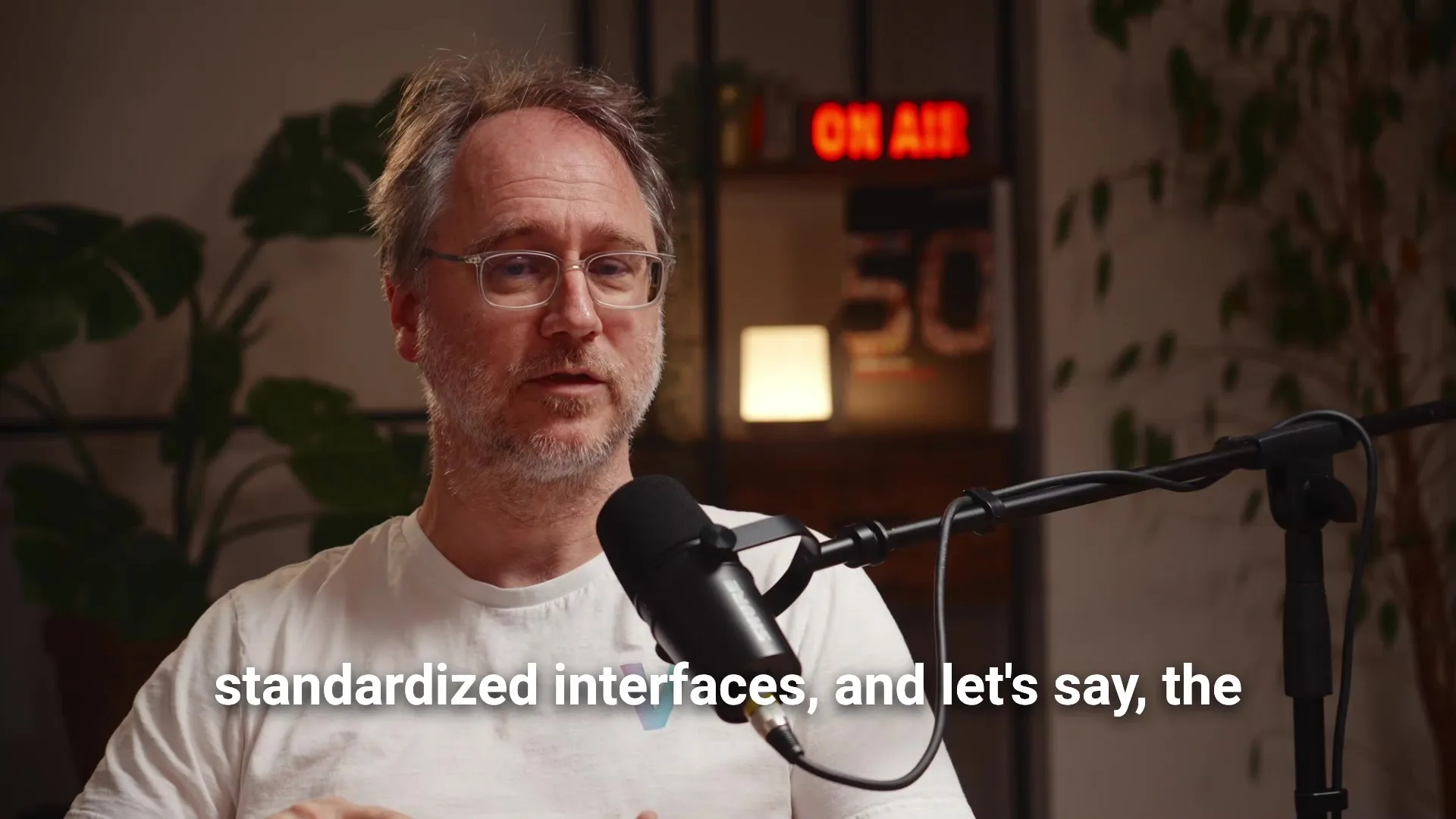
Open development platforms have made it easier for engineers to experiment with electronics and software. Turning that familiarity into equipment suitable for industrial use requires a different set of decisions. Albert Prieto, introduced in this interview as CEO of Industrial Shields, explains how his company developed around that gap.
His account covers the appeal of Arduino, Raspberry Pi and ESP32-based systems, but also the importance of choosing the right hardware, designing the surrounding electronics and understanding what a customer actually needs. The central proposition is greater freedom to develop an application without having to build every part of its controller from scratch.
Prieto describes beginning from mechanical engineering and machine development. Designing the physical machine was familiar territory; gaining control over its electronics and programming required further learning.
Through study, professional work and a technical community, he encountered Arduino. The availability of examples and shared knowledge made it easier to understand how to implement functions and begin experimenting.
One early project involved connecting an industrial distance sensor. Prieto explains that he developed interface electronics rather than connecting the sensor directly to the board. That distinction became important to the company’s direction: accessible development hardware could provide a foundation, while additional engineering would make it useful for industrial signals and conditions.
From prototypes to standard products
Prieto dates the beginning of Industrial Shields to 2012 and describes a period of prototyping and evaluating different boards. The initial products were developed before the business had an established customer base.
Early buyers included people inside companies who already wanted this kind of equipment. They understood open platforms and could see how to develop an application, but did not have time to design the surrounding industrial hardware themselves.
That response helped define the business. Industrial Shields would supply standard hardware that allowed those customers to focus on their software and application. The attraction was partly speed: a machine builder or developer could begin from an available industrial product rather than create a complete controller as a separate engineering project.
Software freedom is central to the argument
Prieto repeatedly returns to customers wanting control over their own developments. He describes frustration with software licences, platform changes and compatibility issues across generations of machines.
In his view, open development tools give customers more scope to create an application that reflects their own knowledge. The value lies in what the customer builds around the hardware, including interfaces, data handling and wider system integration.
This is a perspective on development choices, rather than proof that proprietary platforms cannot support distinctive machines. The interview itself challenges that comparison. Prieto’s stronger practical argument concerns ownership of the development process and the ability to choose tools that fit a company’s longer-term plans.
Reusing an ecosystem can reduce development effort
Prieto explains that Industrial Shields builds on existing processors, boards and software resources rather than creating every layer independently. Community libraries can provide a starting point, with adaptation for the intended industrial use.
That approach affects the company’s own development effort and can also help customers avoid duplicating work. However, he does not present the controller’s purchase price as the only reason to choose it.
For a substantial machine investment, a difference in controller cost may be relatively small. The more important question can be whether the hardware and tools allow the customer to build the intended function and connect it to other systems. Price belongs in that evaluation, alongside development time and control over the application.
Monitoring can sit alongside existing machine control
Asked about common applications, Prieto highlights collecting information from equipment and installations. Customers use that information for monitoring, maintenance-related analysis and production digitalisation.
He describes situations where an Industrial Shields device is installed alongside an existing controller. The original controller continues operating the machine, while the additional device provides a route for data collection or a separate application.
That is a useful distinction for businesses with established equipment. Introducing an open-platform device does not always require replacing the machine’s existing control system. A defined monitoring requirement can be addressed separately, provided the integration suits the installation and the information the customer needs.
Industrial suitability depends on the completed product
The conversation examines electromagnetic compatibility, component life and operating conditions. Prieto’s response centres on the design of the complete device, including the electronics surrounding the original board and laboratory testing.
A processor or development board is not, by itself, evidence that a finished product meets an industrial requirement. The complete assembly and its specified use matter. Prieto describes evaluating component information and testing devices under demanding conditions as part of the engineering work.
He also discusses certification terminology during the interview, distinguishing the certification body from the standard involved. For a purchasing decision, the practical conclusion is to check the documentation for the exact model and intended market. The conversation should not be read as a blanket assurance that every product is approved for every installation.
Choose the computing platform for the job
Prieto distinguishes between applications that need a relatively straightforward controller and those that benefit from an operating system or more substantial local processing.
In the product families discussed, Arduino and ESP32-based devices can serve appropriate control and communication needs. Raspberry Pi-based products are relevant when an application needs capabilities such as a local server, an operating system or more involved data processing.
He cautions against choosing a platform simply because it is familiar. Customers sometimes ask for a Raspberry Pi-based device when a less expensive option could meet the requirement. His stated approach is to understand the application and suggest the suitable product, rather than automatically sell the more capable model.
Timing requirements still need engineering judgement
The discussion also addresses execution speed and time-sensitive work. Prieto explains that behaviour depends on the processor, the code and the way tasks are organised.
That point matters because a platform name does not establish the timing characteristics of an application. Processing requirements and communication activity need to be considered together. A developer must choose hardware that supports the required workload and implement the software accordingly.
The interview therefore offers an argument for flexibility, not a universal specification. Open platforms make more implementation choices available, but the responsibility to understand and validate the finished system remains with the people designing the application.
Education supports adoption
Prieto describes creating courses, videos, use cases and technical content to help people understand what open technologies can do in industrial settings. Demonstrating applications helps address the perception that these platforms belong only in hobby projects.
His ambition is for Industrial Shields to become a useful starting point when somebody asks how to develop an industrial product using open technology. That role combines hardware supply with explanation and guidance.
The broader lesson is that openness alone does not remove engineering work. It can provide a different starting point, one built around available hardware, shared knowledge and customer control over software. Industrial value then depends on how carefully those resources are turned into a working application.
Frequently asked questions
Does using open hardware mean replacing an existing PLC?
Not necessarily. Prieto describes monitoring applications in which an additional device collects information while the original controller continues running the machine.
When does a Raspberry Pi-based controller make sense?
In the interview, Prieto points to applications needing an operating system, local server functions or more substantial processing. The choice should follow the actual workload.
Is a development board equivalent to an industrial controller?
No such equivalence is established. Prieto describes surrounding electronics, component assessment and testing as important parts of developing the complete industrial product.