Plamena Bryant: Start Warehouse Automation With One Clear Bottleneck
Libiao Robotics’ Plamena Bryant explains robotic sortation, system costs, integration and how to start with one warehouse bottleneck.
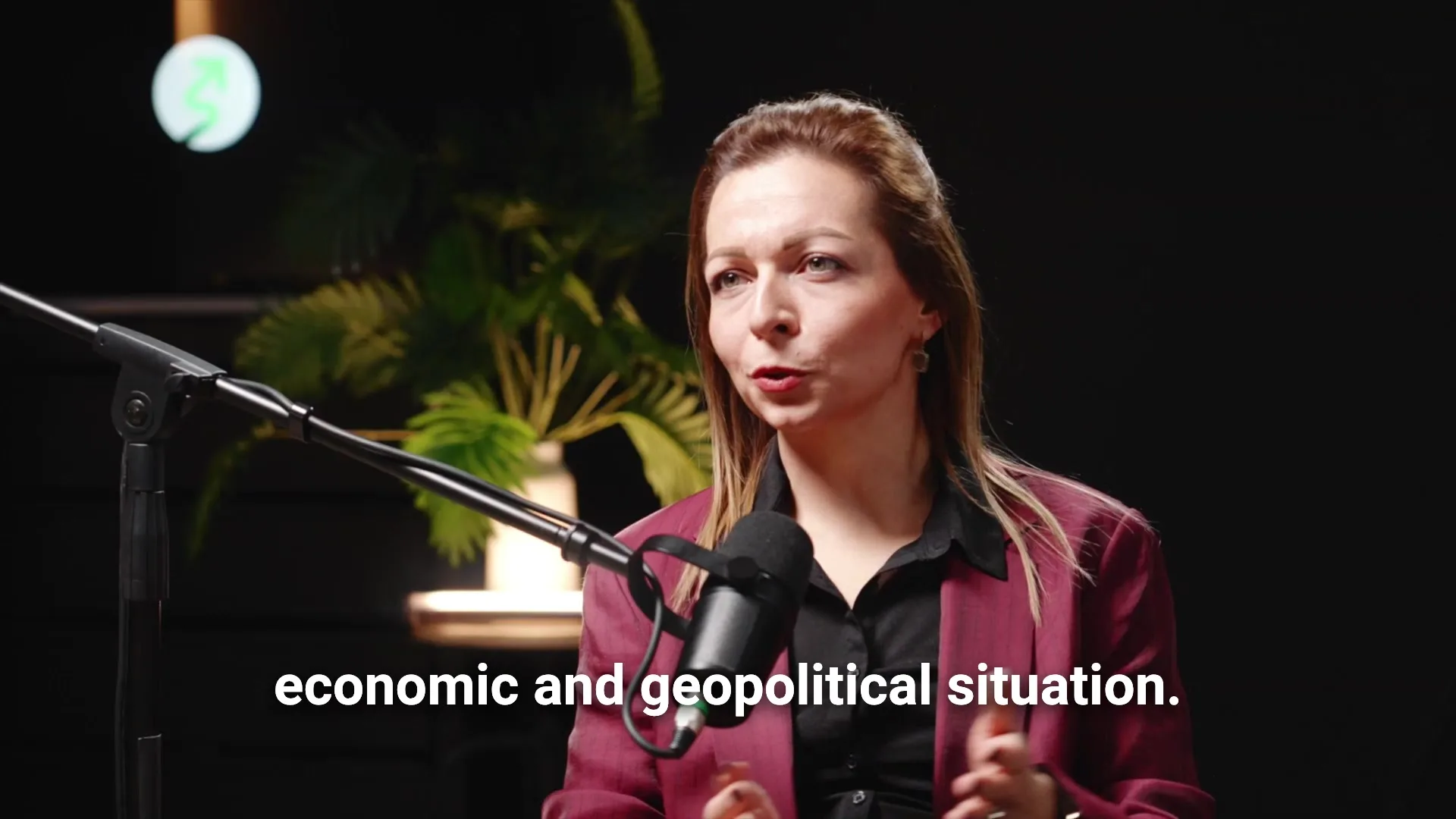
Plamena Bryant in conversation with Industry Focus. Image: Industry Focus.
Warehouse automation does not have to begin with a complete rebuild. In this Industry Focus interview, Plamena Bryant describes a more focused approach: identify a process that constrains the operation, assess the data and introduce an appropriately sized system with a path to expansion.
Speaking about Libiao Robotics, Bryant connects flexible robotic sorting with a wider discussion of fulfillment, integration and long-term support. The company also identifies her as Senior Regional Sales Manager in its official webinar announcement. Her central advice is to evaluate the system and its operating role, rather than start with the purchase price of an individual robot.
What robotic sorting actually does
Sorting directs an item to the appropriate destination. Bryant illustrates this with outbound parcels that need to reach a particular carrier, postcode group or store. In the robotic approach she describes, a parcel is placed onto a small robot, which carries it to the assigned output.
Outbound dispatch is only one application. Sorting can also organize incoming goods, returns or items that need to be grouped into customer orders. The required destinations and the process around them determine the system’s role.
This distinction matters during a project discussion. A request for a sorting robot is incomplete unless the team understands what is being sorted, how items arrive, how destinations are assigned and what happens after delivery. The equipment belongs within a flow of information and material.
Bryant’s examples make the technology easier to evaluate: begin with the bottleneck and the required output, then examine whether robotic sorting is a suitable way to connect the two.
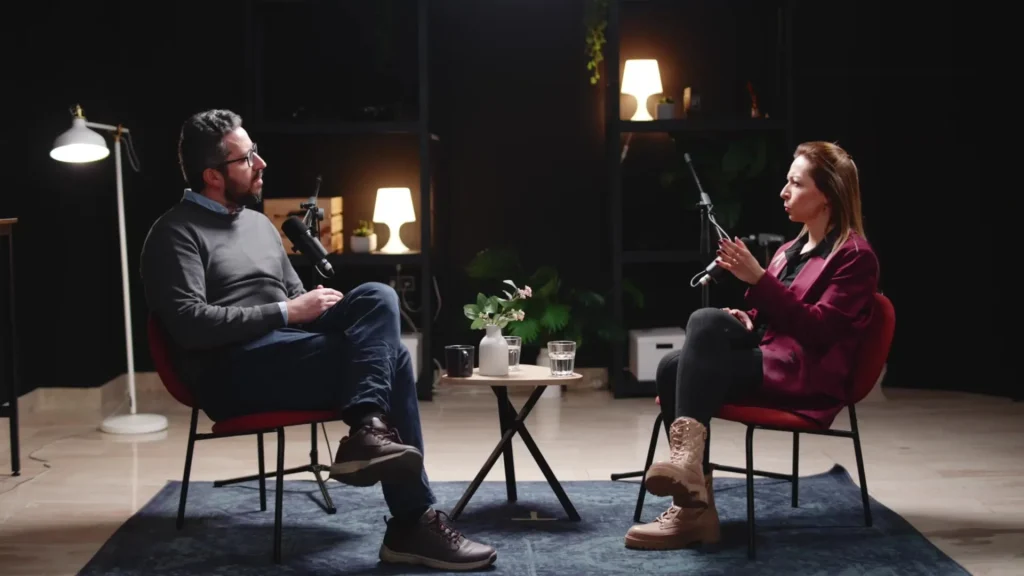
Plamena Bryant speaking to Industry Focus. Image: Industry Focus.
Flexibility includes the layout and future demand
Bryant contrasts flexible robotic arrangements with fixed conveyor-based sorting installations. Her emphasis is on the ability to start at an appropriate size and develop the system as requirements change.
She describes discussing future demand during the initial design: what should the installation do in its first year, and what might be required several years later? That helps distinguish immediate capacity from a possible expansion path.
A flexible system may also complement existing automation rather than replace it. Bryant mentions requests from companies whose established sorter is aging or cannot absorb additional throughput. In those situations, the question is how a new system fits alongside what already works.
Her comments should not be interpreted as a claim that fixed automation is always unsuitable. The useful comparison is application-specific. Layout, volume, growth expectations, integration and support all affect the decision. Flexibility has value when it addresses changes the operation is likely to face.
Connect sorting with picking and replenishment
The interview discusses several ways to feed a robotic sorter. A worker can place parcels onto the robots, or an automated conveyor can provide the incoming flow. The right arrangement depends on the surrounding process.
Bryant also describes combining storage and picking with sorting. In her batch-picking example, a worker takes items presented by a picking system and places them onto sorting robots, which distribute those items to their respective orders.
That arrangement shows why software and integration matter. The system needs to know which item belongs to which order and coordinate the handover between different pieces of equipment. A successful physical transfer without the corresponding information would not complete the fulfillment task.
For an operations team, the practical question is where walking, waiting or repeated handling occurs. Connecting two activities may be more valuable than optimizing one in isolation, provided the combined process can be operated and supported reliably.
Evaluate total ownership cost, not one robot’s price
Bryant recalls being asked at exhibitions how much an individual robot costs. Her response is that the customer buys a system, and should evaluate the investment on that basis.
The total includes more than the vehicle itself. The proposed arrangement, implementation and continued operation determine what the business is committing to and what it expects in return. A low unit price does not establish a strong project, just as a larger initial investment does not automatically establish greater value.
She discusses operating intensity as one factor in the business case. More sustained use can create more opportunities to benefit from automation, but the result depends on the process and the costs being changed.
The interview includes examples of payback and deployment timing. Those are vendor observations in the context of the conversation, not quotations for a new project. A buyer should obtain a plan based on its own data, scope, site conditions and support requirements.
Data and simulation turn interest into a proposal
Bryant outlines a process that starts with a conversation about the customer’s challenges and, ideally, a warehouse visit. The aim is to confirm the bottleneck and understand how the proposed system could improve the operation.
Data analysis then supports solution design. She describes simulation as a way to assess the proposed configuration, including the number of robots required. The team discusses the design and implementation before moving into the commercial and delivery stages.
This process separates the time spent defining and approving a project from production, shipping and installation. That distinction is useful because a quick technical installation does not mean the complete decision and deployment process takes equally little time.
For smaller operations, the analysis may indicate that further volume growth is needed before a particular investment makes sense. Starting a discussion does not require assuming that immediate purchase is always the correct outcome.
Local support and references help establish confidence
Bryant emphasizes Libiao’s network of local partners and integrators as part of the customer relationship. They provide a point of contact for implementation and continued support.
She also stresses references. A prospective customer wants to understand whether the provider has delivered a comparable system and can support it as requirements change. Site visits and conversations with existing users can make those discussions more concrete.
The deeper issue is continuity. The relationship should cover more than delivery day. What happens when demand grows, the process changes or additional equipment is introduced? The customer needs to know how the supplier and integrator will remain involved.
A credible automation proposal therefore combines a technical design with a support arrangement. Neither should be left vague because the other looks impressive.
Prepare people for the automated operation
Bryant sees new responsibilities emerging around robotic systems. Maintenance requires engineering capability, while operational analysis requires people who can interpret data and adjust the use of the system.
She gives the example of changing the number of active picking stations as demand changes. The value of automation depends partly on people understanding the operation well enough to make such decisions.
For Industry Focus readers, the interview’s takeaway is a manageable starting point: select one measurable constraint, establish the required flow and evaluate a system that can address it. Keep future growth in view, but let verified operational needs determine the first step.
Frequently asked questions
Is robotic sorting only for outbound parcels?
No. Bryant describes outbound sorting, inbound sorting, returns and order consolidation as different applications. Each requires its own process and information design.
Must an entire warehouse be automated at once?
No. The interview advocates starting with a defined bottleneck and expanding when the business case and operating experience support it.
What should buyers compare beyond robot price?
Compare the complete system, integration, expected operating costs, support and expansion requirements. References and a data-based design help establish whether the proposal fits the operation.
Free membership
Keep reading — it’s free.
Join with your company email to read every case study, interview and article in full. No payment, no card.