My Jewellery: one robotic operation for three growing sales channels
My Jewellery told Industry Focus how a shared robotic picking system helps it serve sales channels growing at different speeds.
My Jewellery · Geek+
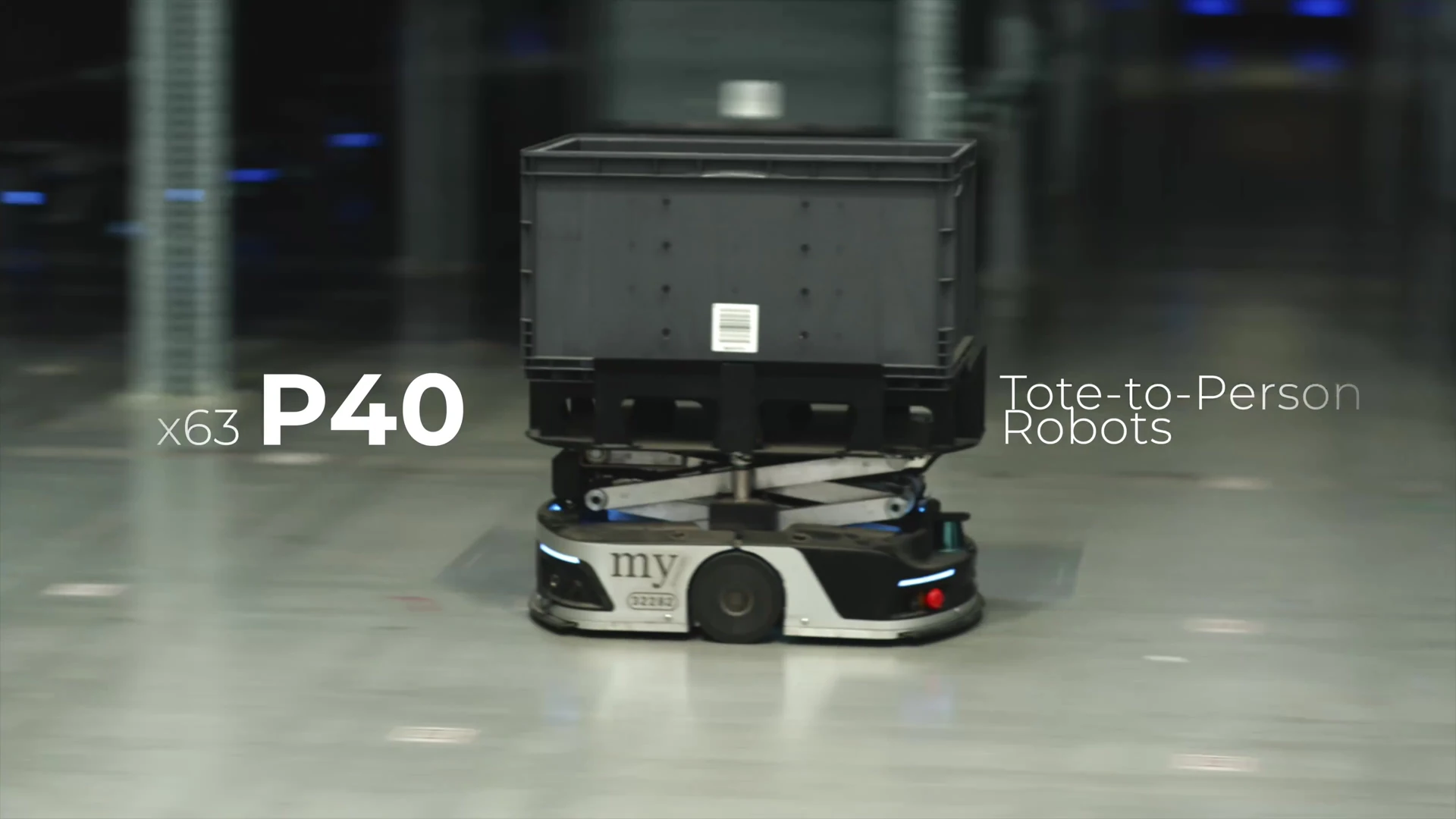
P40 mobile robot in the My Jewellery warehouse. Image: Industry Focus.
My Jewellery’s automation story centres on a familiar scale-up problem: a manual warehouse can only add people up to a point. In our interview, the company described growth across wholesale, physical retail and e-commerce, with each channel developing at its own pace. Storage and fulfilment had to absorb that combination without every increase in demand depending on a larger workforce.
The problem was the channel mix as well as volume
The business began by selling jewellery online and expanded into its own stores and department-store distribution. Today it describes itself as a fashion brand selling jewellery, apparel and accessories. That progression created more than a simple rise in parcel count.
Wholesale and store replenishment do not generate the same picking patterns as individual online orders. The team listed B2B and B2C work, single and multiple picks, and batch picking within the same operation. Any automation decision had to consider how those order types would share resources.
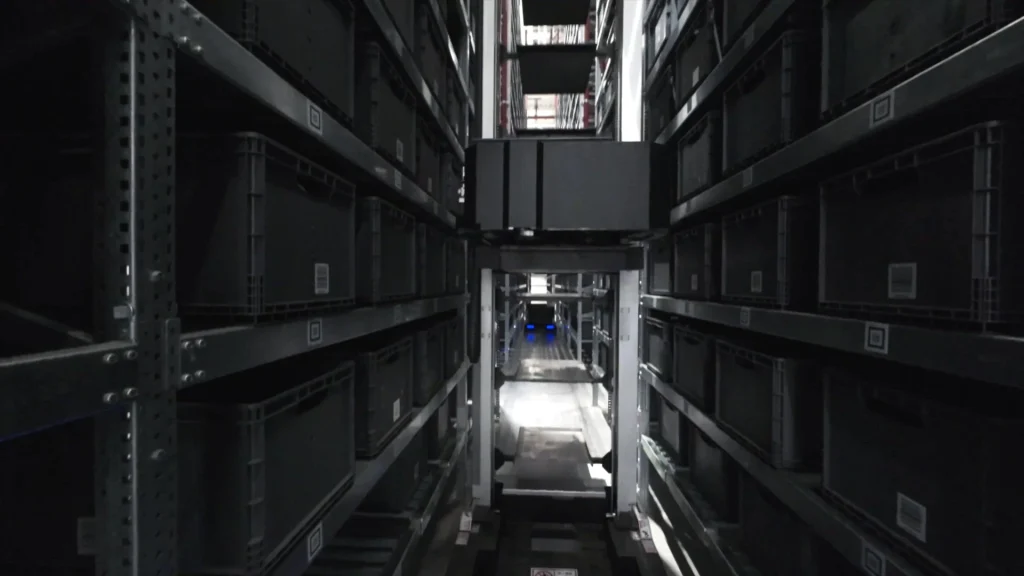
Tote-storage aisle in the My Jewellery robotic installation. Image: Industry Focus.
Flexibility shaped the selection
My Jewellery says an AMR solution scored highest in its selection matrix because it offered the flexibility to scale later. Geek+ implemented a tote-to-person system combining RoboShuttle 8 and P40 robots.
The practical change is straightforward: robots bring inventory totes to a workstation, where an employee completes the pick. Different workflows can be organised around one common system instead of sending pickers to every item.
The ability to combine order types is the more telling part of the story. People remain in the process; what has changed is how stock moves.
What employees and managers report
A member of the warehouse team told us the operation can reach around 14,000 order lines a day, referring to peaks such as Black Friday and Christmas. That is a peak capability, not a year-round daily average or an independently verified throughput test, and it does not transfer automatically to another site.
The company also reports less walking, more standardised processes and higher output, and links its pick-to-light system to better accuracy. It did not share comparable before-and-after accuracy data, so no percentage improvement can be attached to that claim.
On the financials, management described the payback as fast but did not give a period. What can be said is that the company considers the economics attractive alongside the operational benefits.
Expansion was designed into the operating model
When we spoke to the company, two expansion phases were planned. The first would add robots to the existing grid and introduce a mezzanine to improve inbound processes; the second would extend the racking and add further robots.
These were plans at the time, as is the stated ambition to triple the business over five years. Neither had been completed when we interviewed the team.
The distinction matters: a scalable architecture shows how management intends to respond to growth, while a completed expansion would need a later operational update to confirm.
The lesson for omnichannel fulfilment
My Jewellery’s case is strongest as an account of matching automation to a changing channel mix. The company did not describe one fixed demand pattern; it looked for a system that could support several types of work and grow with the business.
For another retailer, the useful comparison would cover order lines by channel, peak profiles, replenishment requirements and the work that remains at the stations. A robot count alone would not capture the same challenge.
Questions answered
Why did My Jewellery select an AMR approach? The company says flexibility and the ability to scale were central to its assessment.
Did robots remove the human picking role? No. Robots bring totes to people, and employees continue to work at the stations.
Have the expansion phases and growth targets been completed? Not at the time of our interview; the company presented them as plans and ambitions.
Free membership
Keep reading — it’s free.
Join with your company email to read every case study, interview and article in full. No payment, no card.
Industry Focus is a project to tell European industry’s story through the people who build it: engineers, researchers, founders and the teams on the shop floor. Bring your story, your expertise or your project and become part of it.