LPP: scaling fashion fulfilment with a phased goods-to-person system
LPP’s logistics team told Industry Focus why scaling a fashion operation meant developing storage, picking and software together.
LPP · Geek+
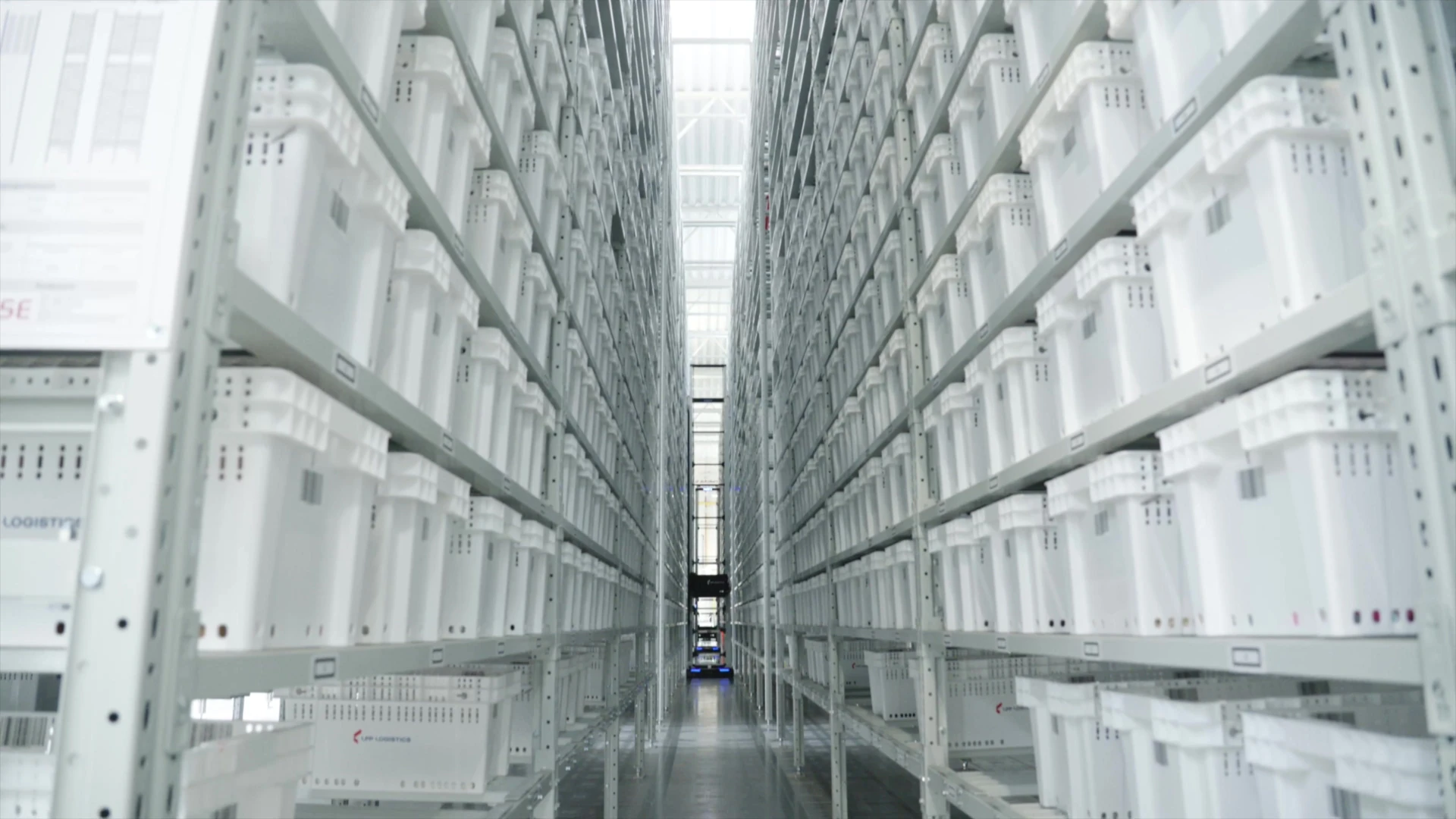
High storage aisles in LPP’s Geek+ fulfilment installation. Image: Industry Focus.
LPP’s automation story begins with a scaling problem. More space and more people had supported the business, but adding to the workforce no longer produced a matching increase in output. Speaking to Industry Focus, the group’s logistics team described an operation that could require more than 2,000 people at a single site, at a time when e-commerce was approaching 30% of the business. Those figures describe the situation at the time of our interview rather than a current company-wide baseline.
The challenge: growth without a linear increase in resources
LPP Logistics serves the group’s five fashion brands. Its task was to respond to changing sales patterns and a broader online range while keeping a workable cost structure. Pickers worked from manual shelving roughly two metres high and had to travel through the warehouse to retrieve stock.
The underlying issue was not simply travel distance. Storage configuration, access to a growing assortment and the organisation of picking all limited the ability to expand. A faster individual process would have had limited value if the next step remained congested.
A member of LPP’s logistics team discussing the automation project. Image: Industry Focus.
The solution: combine storage access and tote transport
LPP chose Geek+ on the strength of its implementation experience, the proposed deployment pace and the expected economics compared with manual operations. The team told us that manufacturing and installation took four months for this project, a figure specific to the deployment rather than a standard lead time.
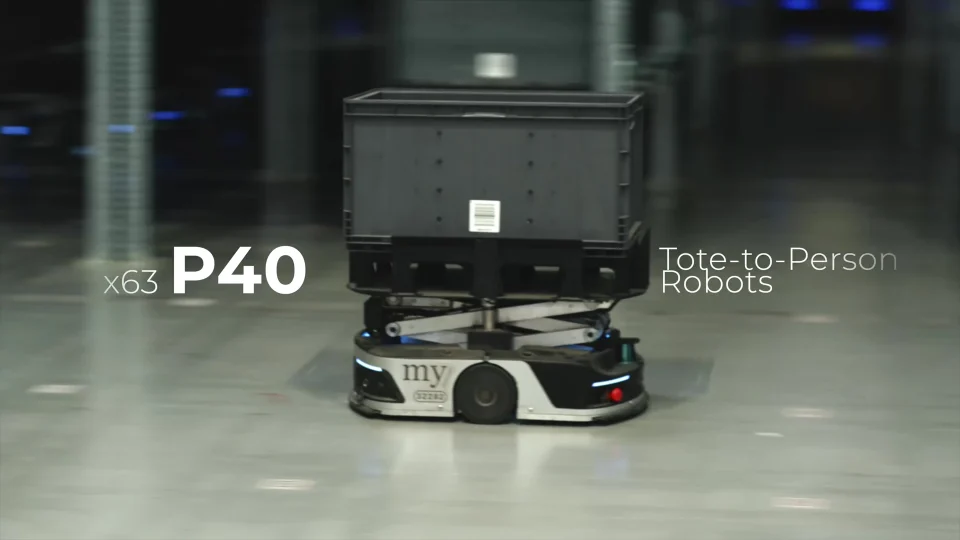
The concept developed in phases into a RoboShuttle goods-to-person system. One type of robot retrieves totes from high storage, while smaller autonomous mobile robots carry them to operators. Stock is now stored at heights of up to 12 metres, compared with the earlier manual shelving.
This division of work matters. The storage robot and the transport robot do different jobs, linking dense storage with the workstations where people pick orders. LPP has not simply bought a type of robot; it has built an integrated operating model.
The results LPP reports
At the PTK fulfilment centre, LPP reports more than 700 robots and over 500,000 storage locations. The team cited an increase in storage density of more than 60% and productivity approaching four times the previous level. A fivefold increase remains an ambition rather than an achieved result.
These are the company’s own figures. LPP did not share the measurement period, the full baseline, the order mix or any independent audit behind them, so they show the scale and direction of the change rather than a benchmark for another warehouse. A wider figure of around a thousand robots was also mentioned; it covers a broader scope than PTK, and we have not combined the two.
Software turns equipment into an operation
The logistics team gives software a central role: coordinating movements, avoiding congestion and grouping orders into batches. Reporting lets the operation track productivity and other key indicators.
That is an important part of the story. Extra storage capacity would be less useful if tote movements overwhelmed the picking area, and more robots would add little if tasks and traffic were poorly coordinated. In LPP’s account, physical expansion and the software layer that organises the work go together.
The next phase remains a plan
At the time of our interview, robotics had been deployed at two fulfilment centres and LPP intended to continue at other locations. Further hardware and software improvements were discussed as opportunities rather than commitments. Neither a group-wide rollout nor the fivefold productivity target had been reached.
For operators weighing a similar investment, LPP’s experience raises three useful questions: which constraint is being removed, how will the next one be measured, and can the storage and software architecture support the next phase? The headline numbers are most valuable when read alongside those questions.
Questions answered
What type of automation did LPP implement? A phased goods-to-person system combining high-access tote retrieval with mobile robots that deliver totes to operators.
Was fivefold productivity achieved? No. LPP reports productivity approaching four times the previous level and describes fivefold as a target.
How many robots operate at PTK? More than 700, serving over 500,000 storage locations, according to LPP.
Free membership
Keep reading — it’s free.
Join with your company email to read every case study, interview and article in full. No payment, no card.
Industry Focus is a project to tell European industry’s story through the people who build it: engineers, researchers, founders and the teams on the shop floor. Bring your story, your expertise or your project and become part of it.