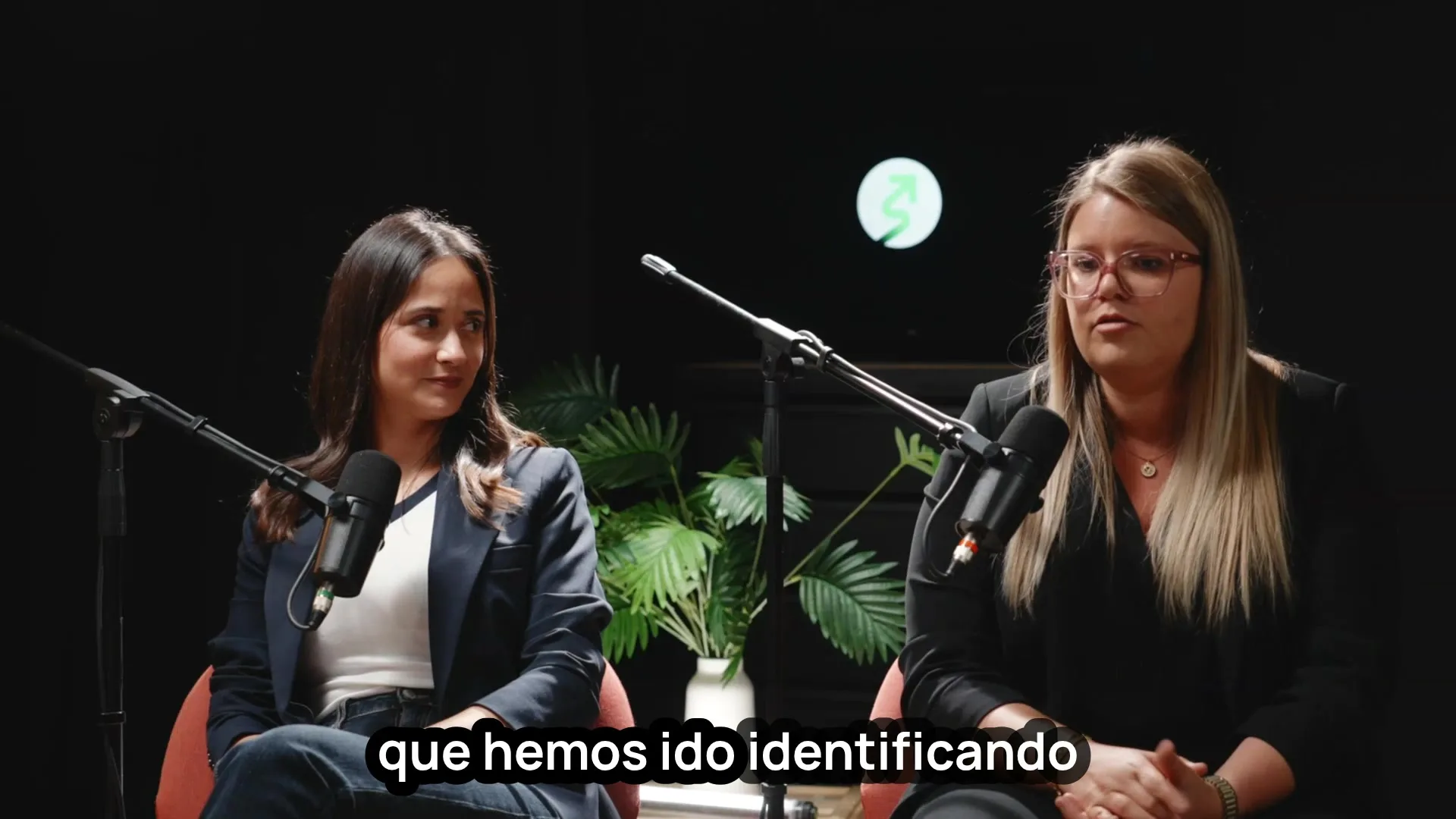
Maintenance teams often solve the same problem more than once. One technician discovers a repair, another encounters the same fault elsewhere, and the useful knowledge remains in a paper report, a PDF or somebody’s memory. In this Industry Focus interview feature, Zanet co-founders Vanessa Gracia de Oliveira and Sophía Alvaradejo explain their approach to making that experience available across an organisation.
Their starting point is practical. Industrial companies face increasingly complex machinery, a shortage of experienced maintenance staff and pressure to restore equipment quickly. The founders see artificial intelligence as a way to make existing expertise more accessible and give technicians more time for the work that requires their judgement.
Gracia de Oliveira and Alvaradejo met through their previous work in industry. Their backgrounds cover mobile robotics, software, material-handling equipment and operations. Alvaradejo describes moving from product responsibilities into managing larger equipment and service operations. Gracia de Oliveira brought experience connecting software with automated machinery.
Those roles exposed a recurring disconnect. Businesses wanted to grow, but could not always recruit the technicians needed to maintain the machines they already supported. Meanwhile, capable people spent time searching manuals, calling colleagues and reconstructing information that the business had acquired before.
The founders concluded that the problem crossed equipment categories. Similar gaps appeared wherever technicians needed to diagnose and repair machines. That encouraged them to build a maintenance-specific product rather than assume that access to a general-purpose chatbot would solve the organisational problem.
Three modules around three different decisions
In the conversation, the founders describe Zanet through three connected modules: Expert, Manager and Business. Each addresses a different user, while drawing on the broader maintenance workflow.
Expert is designed to support the technician carrying out a repair. Manager focuses on the people coordinating work, materials and customer commitments. Business addresses decisions about assets, costs and performance. The logic follows the structure of a service operation: carrying out interventions, organising the team and deciding where the company should invest.
They present these modules as parts of one platform that can expand with an organisation. A small team might begin with support for its technicians; a larger service business could add management and business functions as its requirements develop. The subscription approach described in the interview follows the number and types of users needing access.
Reusing the knowledge inside repair records
The Expert module aims to bring together manuals and information from previous interventions. Alvaradejo describes the frustration of discovering that a colleague elsewhere had already resolved a fault that another technician was still investigating.
An important distinction is the difference between storing a report and making its contents useful. A digitised work order can still become an isolated document. Zanet’s proposition is to make the repair information available for subsequent questions, so each intervention contributes to a knowledge base rather than simply closing an administrative task.
The founders also describe multilingual interaction as a useful capability. Equipment documentation may arrive in a different language from the one a technician uses. Their aim is to reduce that barrier when searching for information and asking for help. The underlying value remains access to relevant maintenance knowledge, whatever language the original document uses.
Helping managers act on operating patterns
For workshop and service managers, the founders emphasise alerts and patterns that can support a decision. Examples include repeated visits following repairs, unusually long travel times, or a machine model experiencing recurring faults.
They use repeat visits to illustrate how information might prompt a closer look at training needs. The example is an operational signal rather than a reason to judge an employee from one number. In the broader workflow they describe, managers need to understand where time goes and how the team can work more effectively.
Materials and customer requests belong to the same picture. The platform is described as connecting work orders, parts requirements and service conditions. Customers can submit intervention requests, allowing the service organisation to see the relevant machine and associated commitments without reconstructing everything through separate phone calls.
Connecting maintenance with asset economics
The Business module addresses a question that goes beyond the workshop: does another major repair make sense for this asset?
Alvaradejo gives the example of an expensive engine repair. Answering properly requires more than knowing the latest quotation. The company also needs the machine’s history, acquisition cost, accumulated repairs and remaining value. Her argument is that this information should be available together when the decision is being made.
The same approach applies to comparing equipment utilisation, recurring failures and profitability. For rental or distribution businesses, a machine that spends too long between customers can create a different problem from one that fails frequently. The founders want users to ask specific business questions without first assembling a new spreadsheet analysis each time.
Protecting expertise as teams change
Knowledge retention is central to the interview. Experienced technicians eventually leave or retire, while new starters need time to understand equipment and service practices. If critical information lives only in personal memory, the organisation loses more than a member of staff when that person departs.
The founders frame Zanet as support for people working under those conditions. They argue that the immediate need is to make scarce technical capacity go further. Faster access to information can help an experienced technician and can also support somebody learning an unfamiliar product.
They describe measuring the opportunity through time released from document searches and other supporting tasks. For a business assessing the proposition, that shifts attention towards a concrete workflow: where technicians spend time today, what information delays them and whether access to previous repairs changes the result.
Starting with a recognisable maintenance problem
The clearest starting points in the conversation are familiar: paper work orders, repeated faults, over-reliance on a few experts and service opportunities that cannot be accepted because the team is already stretched.
The founders’ ambition is to connect those problems rather than treat AI as an isolated technology purchase. A repair record can help the next technician, inform the workshop manager and contribute to an asset decision. Their broader proposition is that maintenance knowledge should remain usable by the company as its people, equipment and customer base change.
Frequently asked questions
Who is Zanet designed to support?
The founders describe applications for maintenance providers, equipment rental and distribution businesses, manufacturers and companies maintaining their own machinery. The relevant users range from technicians to service managers and business decision-makers.
What distinguishes Expert, Manager and Business?
Expert supports access to technical repair knowledge. Manager connects day-to-day service coordination and operating information. Business focuses on asset economics and decisions about performance, repair and replacement.
Does the interview present AI as a replacement for technicians?
No. The founders emphasise the shortage of technical staff and the value of their experience. Their stated aim is to help people use knowledge more effectively and spend less time searching for information.