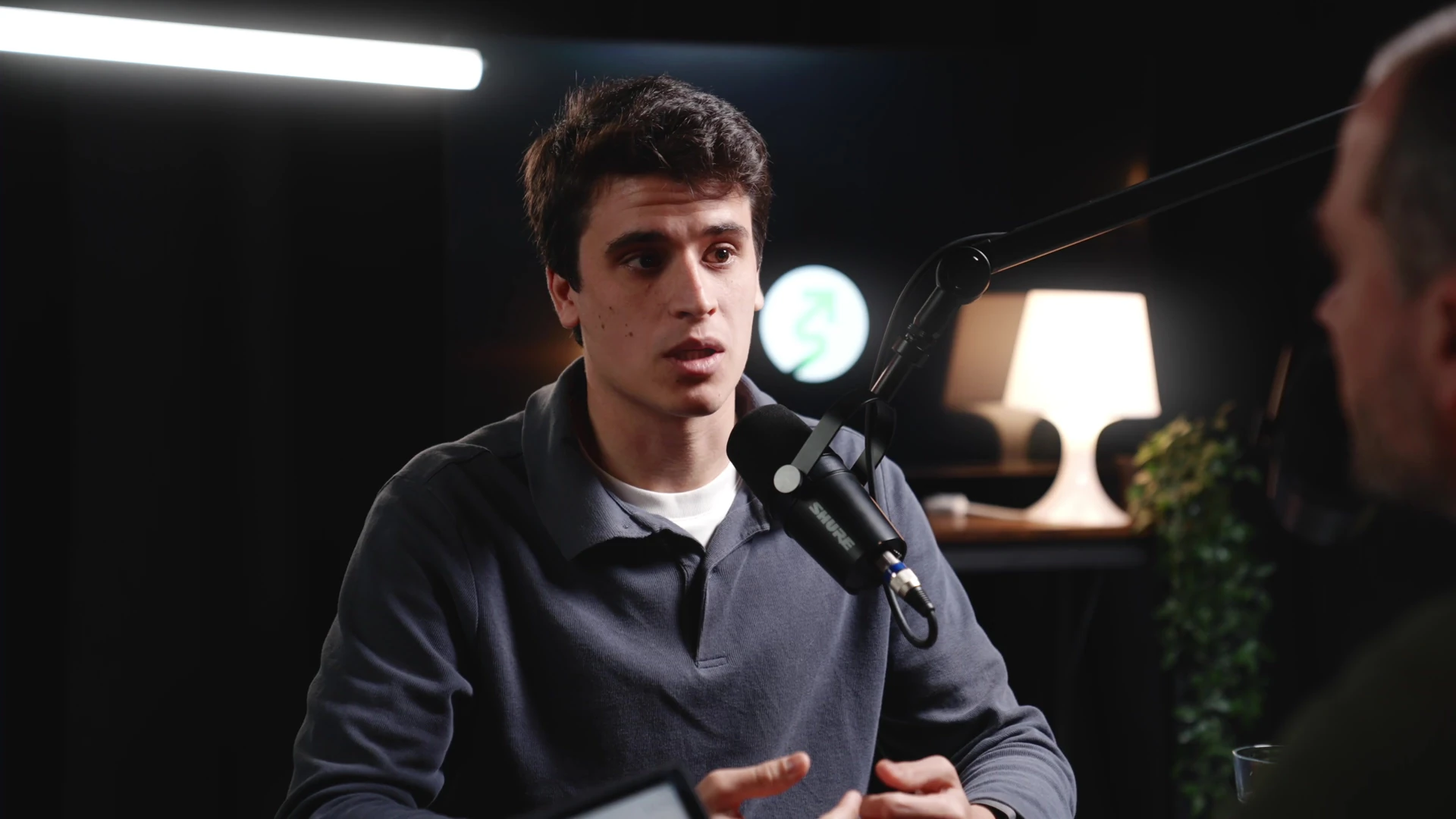
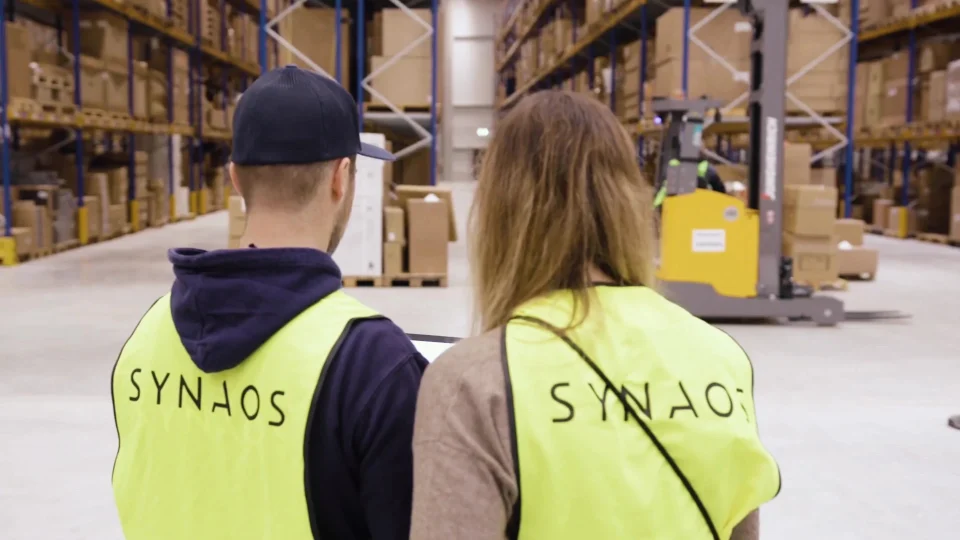
Eugeni from Magnetika discussing charging technology in the recorded interview. Frame from the source recording.
A mobile robot can navigate autonomously and still depend on people when charging fails or a battery needs attention. In the recorded interview with Eugeni from Magnetika, that gap between movement and operational continuity is the starting point for discussing wireless charging.
His account focuses on reducing the need for physical contact and accommodating misalignment between a transmitter and receiver. The discussion is a supplier perspective on the problem; it is not a comparative test proving wireless charging is the best option for every fleet.
What problem is the charging system meant to solve?
Eugeni describes exposed charging contacts becoming dirty or oxidised, and the effect of imperfect positioning at a charging point. In the scenarios he discusses, a failed connection can prevent the vehicle from charging and require intervention.
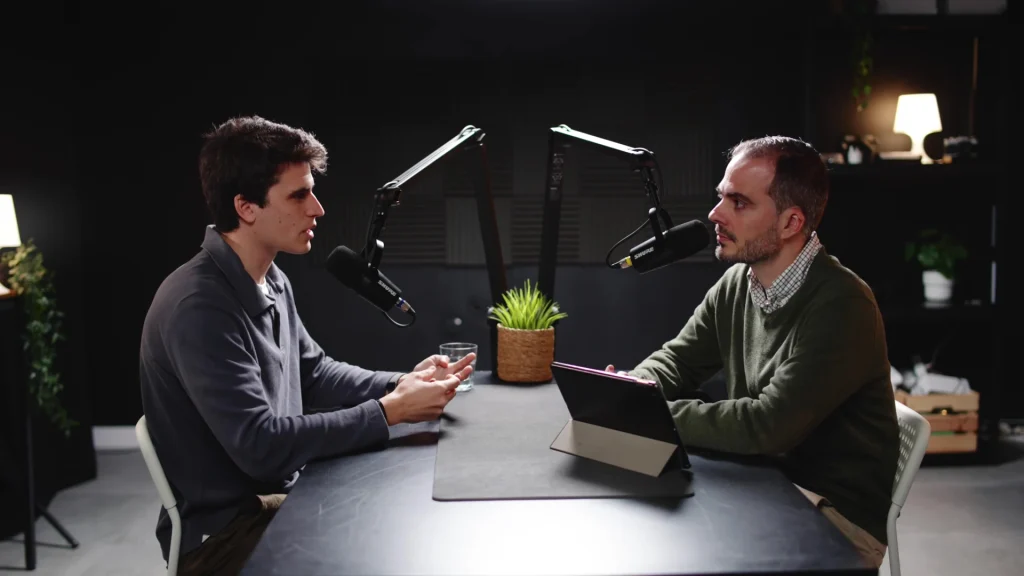
Wide view of the Magnetika interview discussion. Frame from the source recording.
The operational issue is therefore more specific than whether a cable is present. It is whether the vehicle can complete its charging routine under the conditions in which it actually works.
A useful evaluation begins by identifying that routine. Does charging take place during planned idle periods? How often does the fleet need human assistance? Which failures occur today? These are editorial questions prompted by the interview, rather than performance claims made for an unnamed installation.
How Magnetika describes its approach
The interview distinguishes conventional inductive charging from the resonant approach used by Magnetika. Eugeni says its technology is designed to tolerate separation and misalignment between the transmitting and receiving elements.
He also explains that coil dimensions, charging power and operating frequency affect the system. The account therefore does not support a universal distance or efficiency figure. A charging specification needs a defined configuration and operating condition.
Magnetika’s project description published through Business Factory Auto also identifies inductive magnetic resonance and tolerance of misalignment as central to its approach. It confirms the company’s stated technology direction rather than independently proving a particular fleet result. Project reference.
Availability is an operating question
The interview discusses AGVs, AMRs and drones as applications where autonomous charging can be relevant. Some are presented as opportunities or development directions. Their mention should not be read as evidence that all have completed commercial deployments.
For a warehouse team, the useful implication is to connect charging to the rest of the operation. A technically successful transfer of power is one part of the picture. The timing of charging, the vehicle’s ability to reach the point and the need for recovery also shape the process.
No quantified uptime increase or verified reduction in maintenance is established by this recording. Those outcomes would need evidence from a defined installation over a stated period.
Charging data can inform the wider system
Eugeni describes collecting charging data and the possibility of integration through APIs with fleet-management or manufacturing systems. In the recording, this is part of the additional operational value Magnetika seeks to provide.
The distinction between a stand-alone charging device and connected operational information is useful. Data about charging events can help a team ask better questions, but collecting data does not itself demonstrate an improvement. The information needs a defined use in planning, maintenance or investigation.
Questions to resolve before a trial
The interview suggests a focused brief: state the positioning variability, required energy transfer, available charging windows and expected conditions at the charging point. Ask the supplier to explain which configuration addresses those requirements and which evidence supports it.
This is a way to frame an operational discussion, not a design specification. The recording is too general to establish compatibility, safety or performance for a particular robot.
Questions answered
What is the main proposed benefit? Reducing dependence on exposed contacts and exact positioning in the applications described by Magnetika.
Does the interview prove an uptime improvement? No. It explains a technical approach and operational rationale without a measured installation comparison.
What should a trial investigate? The complete charging routine under defined operating conditions, including intervention and recovery.
Free membership
Keep reading — it’s free.
Join with your company email to read every case study, interview and article in full. No payment, no card.