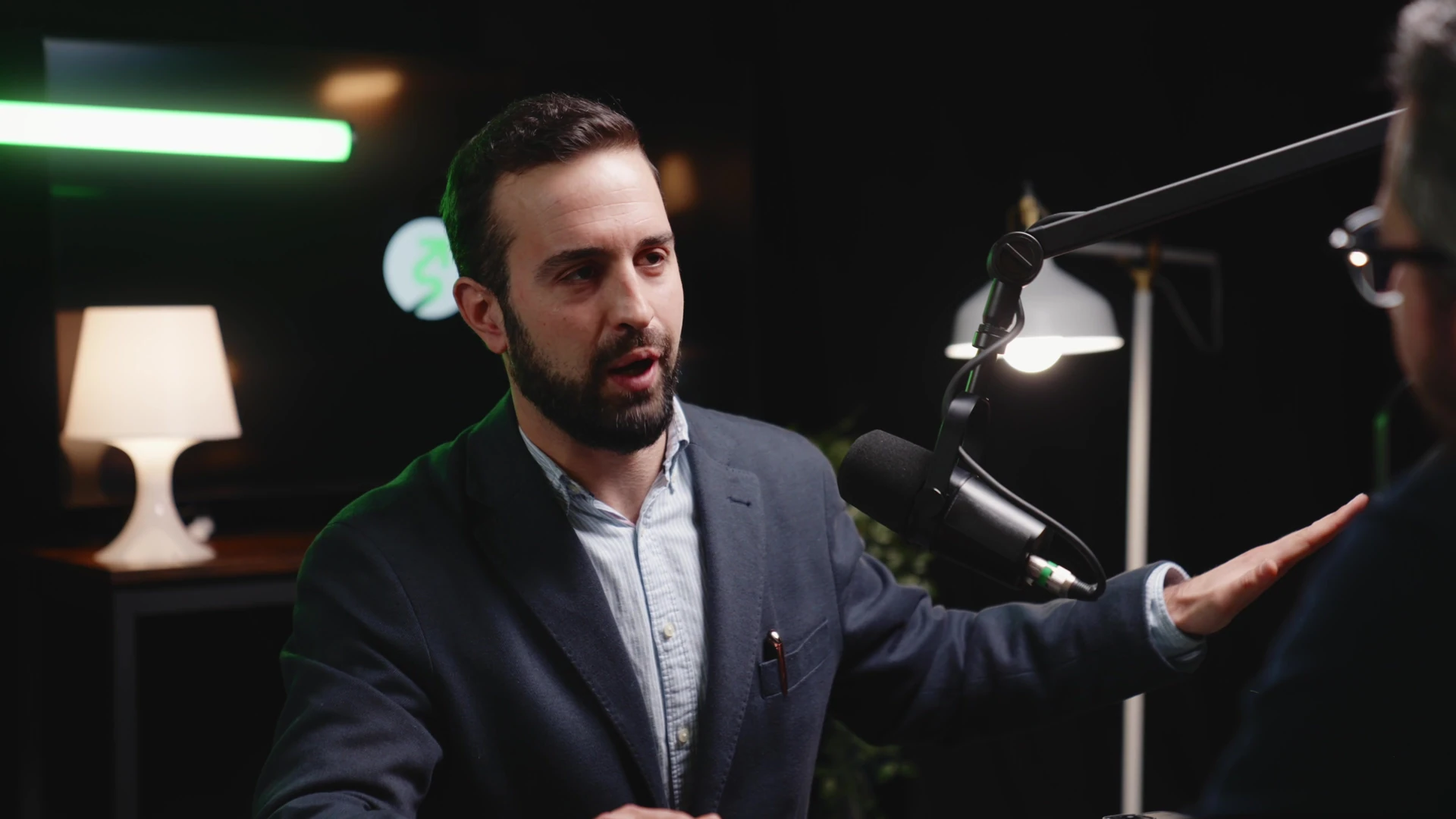
Endika Gil discussing robot cybersecurity in the Alias Robotics interview. Frame from the source recording.
A robot-security discussion has to include the physical work the machine performs. In the recorded interview with Endika Gil from Alias Robotics, the difference is immediate: an incident may affect data, but it may also affect production equipment and people around it.
That perspective provides a useful way to begin an industrial conversation without relying on alarming statistics or assuming that a locally hosted system has no connections. The questions concern the operation, its interfaces and the evidence needed to assess it.
Begin with the task and its dependencies
Endika discusses factory robots in terms of the consequences of their behaviour. The machine is connected to a production process; interrupting or altering it can have effects beyond the computer itself.
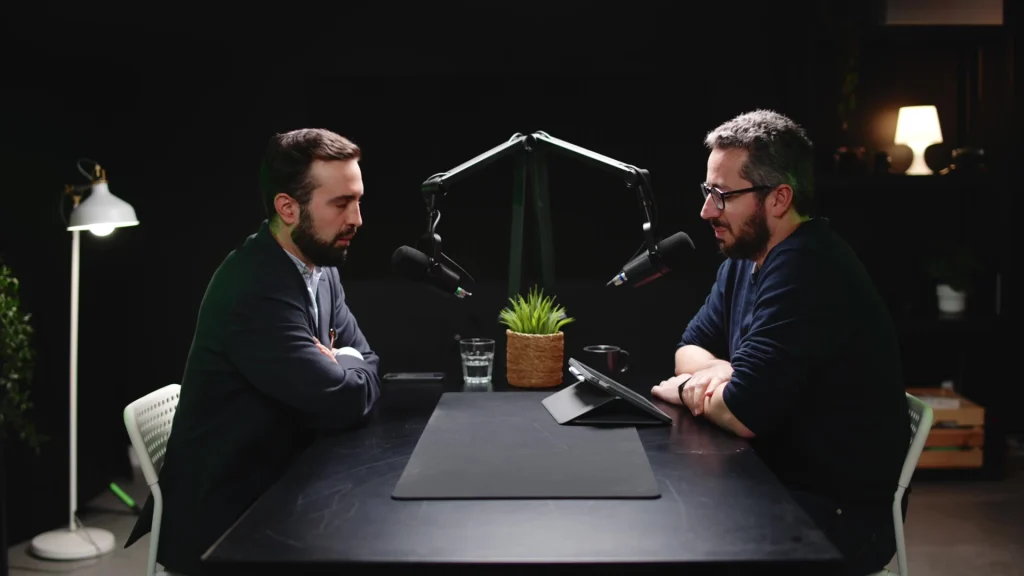
The recorded Alias Robotics conversation about operational security. Frame from the source recording.
This is consistent with NIST’s description of operational technology as programmable systems that interact with the physical environment. Its OT security guidance explicitly considers performance, reliability and safety requirements alongside security. NIST reference.
The point is not that every robot incident has the same consequence. A useful assessment needs the specific task, the surrounding equipment and the people or processes depending on it. The interview’s broad warning does not establish the risk level of an unnamed installation.
Local software does not describe every connection
The conversation challenges the assumption that an on-premises robot is necessarily isolated. Endika identifies connections through factory networks, remote maintenance and mobile-robot communications.
For an operations team, the editorial implication is to describe the actual paths of access rather than stop at a hosting label. Who maintains the equipment? Which organisations need connectivity? What systems exchange information with it? These questions organise a discussion; they are not a claim that a particular connection has been compromised.
This article deliberately does not reproduce attack instructions, default credentials or allegations about named manufacturers. The source itself stresses that vulnerabilities and exposures depend on the use case.
Distinguish normal faults from evidence of an incident
Endika says sophisticated incidents can be difficult to recognise and discusses specialist analysis and monitoring. That should not be simplified into the claim that any unusual robot behaviour proves an attack.
A stopped vehicle, a failed mission or missing communication may have several causes. The useful distinction is between the observation and the explanation. Documenting what occurred, when it occurred and which systems were involved gives the responsible specialists a clearer starting point.
This is an editorial interpretation of the interview’s assessment theme, rather than a forensic procedure or a recommendation to test a live production robot without an agreed plan.
Review ownership as well as technology
The interview also addresses updates and the responsibilities surrounding digital products. Its regulatory remarks belong to the recording’s context and are not used here as a current legal timetable.
The practical discussion can still ask who receives supplier information, who evaluates changes and who coordinates operations with the technical teams. A product feature is only one part of a maintained system.
The same boundary applies to monitoring claims. The presence of a security tool does not demonstrate that all relevant events are covered or that the complete application is protected. Those conclusions require a defined scope and supporting evidence.
A useful first brief
A short initial brief can describe the robot’s task, the systems it exchanges information with, the parties providing maintenance and the operational consequences of disruption. This proposed brief is an editorial tool, not a form supplied by Alias Robotics in the recording.
Its purpose is to make the next discussion specific. Instead of asking whether robots are secure in general, the team can ask which relationships and behaviours need assessment in its own operation. Endika’s interview is most useful as an invitation to that scoped conversation, without turning historical opinions or vendor claims into guarantees.
Free membership
Keep reading — it’s free.
Join with your company email to read every case study, interview and article in full. No payment, no card.