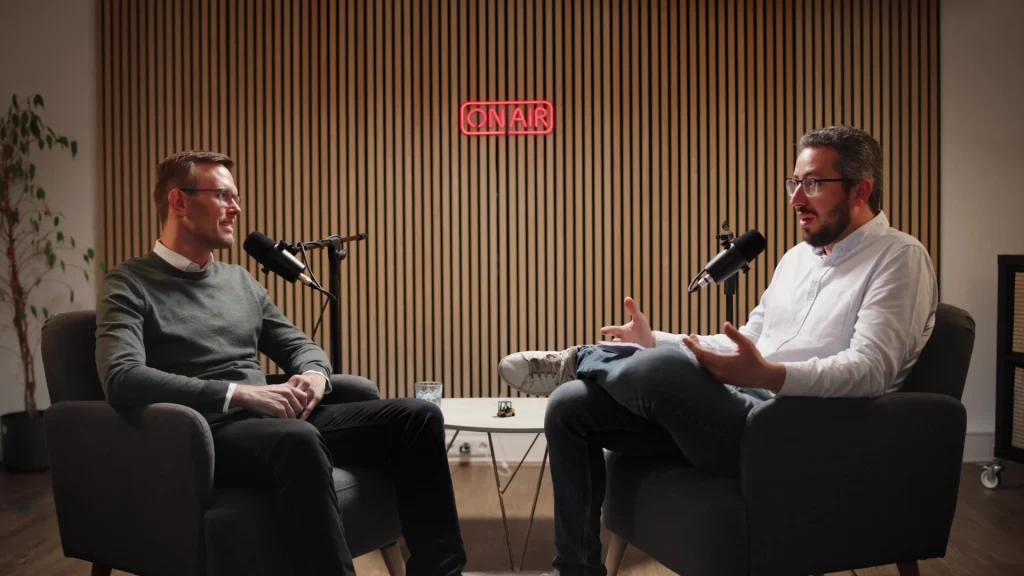
Philipp from SYNAOS discussing mobile-robot interoperability. Frame from the source recording.
Running robots from different suppliers is not simply a matter of placing them on the same floor. In the recorded Intralogistics Insiders interview, Philipp from SYNAOS describes interoperability as a combination of communication, integration work and attention to the process.
His discussion of VDA 5050 provides a useful starting point. The interface can support communication between mobile robots and a higher-level control system. It does not remove the need to understand what each robot can do or how the complete operation should behave.
Why mixed fleets become a practical question
Philipp distinguishes a small initial deployment from an operation that expands across robot types, suppliers or sites. With one or two robots, the integration question may feel contained. As the operation develops, the ability to connect different equipment becomes more significant.
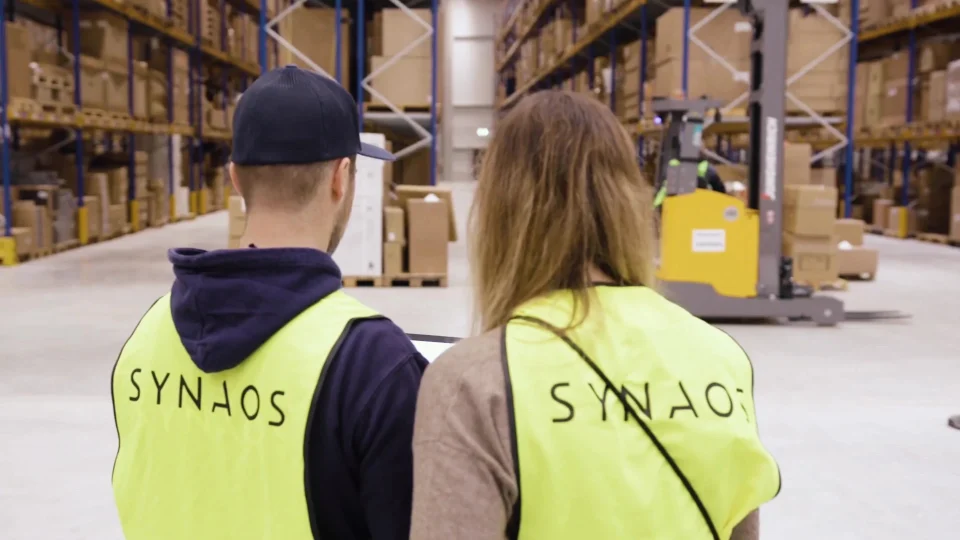
The SYNAOS interview conversation about coordinating industrial material flows. Frame from the source recording.
The business reason is flexibility of selection. Different tasks may require different vehicle types. A tugger, a forklift and an under-ride vehicle do not perform identical work, even if a platform can coordinate them.
The recording presents standardised communication as part of addressing that variety. It should not be interpreted as evidence that any robot can be substituted for another without project work.
What the interface covers
SYNAOS’ current description identifies VDA 5050 as a standardised communication interface between driverless transport vehicles and a higher-level control system. This supports the basic definition used here. Supplier reference.
In the interview, Philipp explains that agreed information exchange gives the control system a basis for coordinating robots from different manufacturers. He also describes practical onboarding and testing with partners before going to a customer project.
The number of published versions mentioned in the historical recording is not repeated here as a current fact. Implementations need to establish the relevant version, supported functions and actual compatibility through their own project documentation.
Navigation differences remain part of integration
A shared communication approach does not make every navigation system identical. Philipp describes different robot types having their own navigation graphs and different movement characteristics.
That matters because the surrounding process still has to work. Vehicles may differ in load handling, turning behaviour or the way changes to their navigation configuration are managed. The interface helps information move; it does not erase those physical and functional differences.
This is why the film’s discussion is broader than a protocol label. An operating project needs to connect the capability of each vehicle to the work being requested and the environment in which it moves.
Test the behaviour that the project depends on
Philipp describes a structured partner onboarding process with defined criteria. His account links technical compatibility to the ability to focus on the customer’s application later.
The editorial implication is to request evidence for the interactions the operation actually needs. Which tasks have been tested? What information is exchanged? What happens when a robot is unavailable? Which party investigates a communication or process issue?
Those questions are a project-review framework inspired by the interview. They are not claims that VDA 5050 mandates a particular support structure or solves every exception automatically.
Keep responsibilities visible
The interview also discusses partnerships with robot suppliers, integrators and other technology or service companies. Philipp describes roles and responsibilities as part of building an overall offering.
That aspect can receive less attention than a demonstration of robots sharing a space, but it is operationally important. Technical compatibility and a workable support arrangement are complementary forms of preparation.
A mixed-fleet proposal is easier to assess when it identifies the communication basis, the differences between vehicles, the tested project behaviour and responsibility for integration. The standardised interface is then placed in the context of the system it supports.
Questions answered
Does a shared interface mean identical robot behaviour? No. The interview explicitly discusses different navigation approaches and vehicle types.
Does interoperability remove integration work? No. Philipp describes partner onboarding, testing and project-specific implementation.
What should readers verify next? The supported interface version and functions, tested interactions, and responsibility for delivery and support.
Free membership
Keep reading — it’s free.
Join with your company email to read every case study, interview and article in full. No payment, no card.