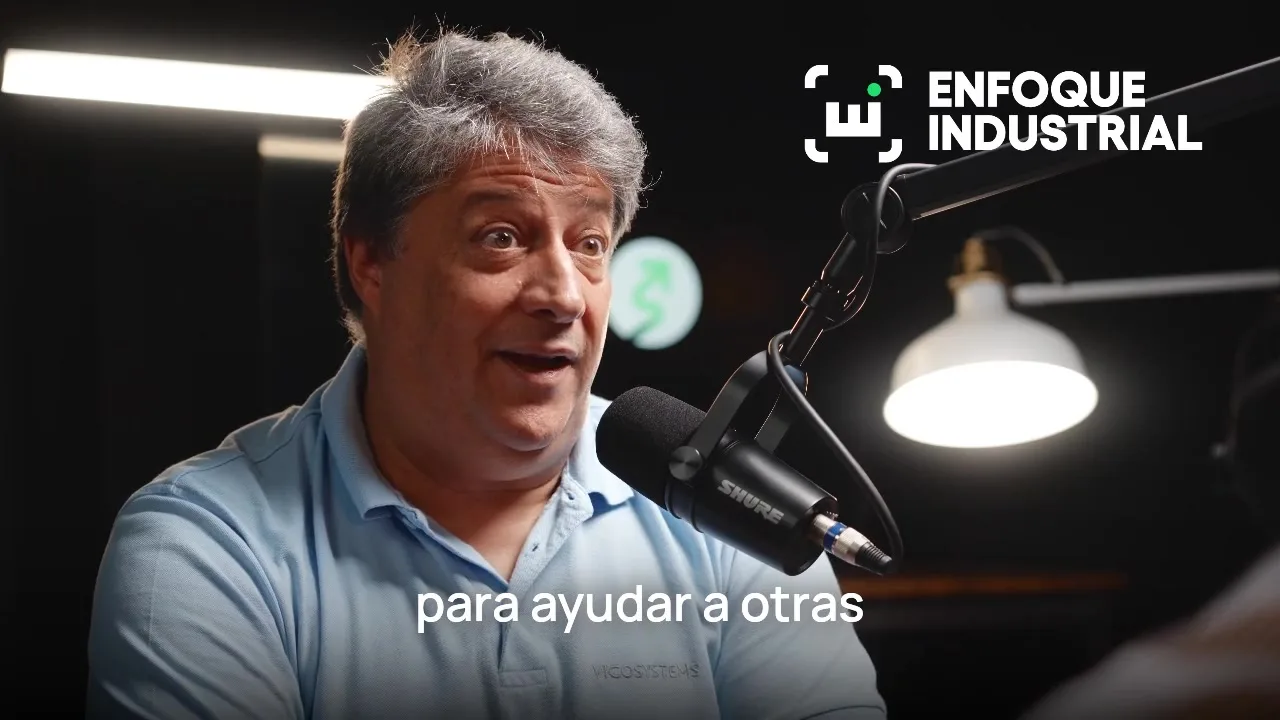
For a smaller manufacturer, a robot can be technically capable and still feel difficult to adopt. The missing piece may be confidence in the application, the ability to maintain it or a clear understanding of what employees will need to learn. Juan José Coronado, introduced as CEO of VicoSystems, places those questions at the centre of automation.
His approach grows out of engineering experience with industrial robots, special-purpose machines and cutting systems. In the conversation, he describes a business focused on helping SMEs use technology through consultancy, demonstrations, training and integration support. The ambition is practical: make the deployment understandable enough for the customer to participate in it.
Coronado starts with the existing process. What does the operator do? What improvement does the business want? Can robotics deliver that improvement within a sensible cost and operational structure?
He is clear that some manual activities remain difficult to automate. Human dexterity and judgement can be important, and a technically imaginable solution may be too expensive for the value it creates. His role is to translate the customer’s wish list into an application that can actually work.
That assessment also helps determine whether an industrial robot, a collaborative robot or mobile robotics is appropriate. He resists treating any one category as the automatic answer. The selection follows the task, the available space, the surrounding equipment and the customer’s ability to operate the result.
Why does training belong inside the project?
Coronado repeatedly returns to the customer’s maintenance and production teams. In his view, training should make those people more capable of commissioning, modifying or supporting equipment, within the limits of their preparation and the application.
He compares the learning curve with the adoption of CNC machinery. Equipment that initially seems unfamiliar can become an ordinary part of production once people develop the necessary skills. Robotics still requires competent engineering, but the customer does not have to remain permanently distant from it.
VicoSystems therefore offers different routes. Some customers need a complete project through an engineering partner. Others have a maintenance department that can take on part of the implementation with training and guidance. Coronado sees value in recognising that difference instead of imposing a single delivery model on every SME.
The challenge is ongoing. As technology develops, training material and technical knowledge must keep pace. An academy is useful only if it prepares people for the equipment and problems they will actually encounter.
What does a demonstration reveal that a drawing cannot?
Coronado contrasts a project represented in drawings with a customer seeing a robot perform a relevant operation. Demonstration makes it easier to evaluate whether the proposed process is plausible and to discuss how it should be implemented.
He also wants customers to interact with the equipment alongside a technician. Watching a polished video is different from understanding how to use the machine, what the maintenance team must know and who will provide support when something goes wrong.
That involvement can change the project itself. Customers become more active in discussing grippers, equipment and process choices. Their operational knowledge can help shape the solution before it becomes an installation that is difficult or costly to change.
How can collaborative and mobile robots work together?
The conversation moves from individual machines to connected workflows. Coronado describes opportunities around end-of-line palletising, moving empty and completed pallets, and linking handling operations with internal transport.
He also discusses combining a mobile platform with a robotic arm for tasks such as inspection. The attraction is the ability to bring manipulation or sensing to different locations rather than treating every operation as fixed to one place.
These examples come with an important condition: integration has to be engineered. Communication, mapping, commissioning and the surrounding production process all matter. A mobile robot’s ability to travel and an arm’s ability to manipulate do not, by themselves, create a complete application.
Does collaborative robotics remove the need for safety engineering?
Coronado distinguishes the robot’s built-in functions from the risks of the whole task. A tool or workpiece can introduce hazards even where the robot itself has features designed for collaborative use.
His broader message is that ease of programming should not be confused with an exemption from risk assessment. The installation must be considered as a complete system. The team needs appropriate knowledge of safety requirements and of the specific operating conditions.
This also explains why training is more than a way to reduce commissioning effort. People must understand how to make changes responsibly and when specialist help is needed. Simpler interfaces can improve accessibility without making every modification straightforward or safe.
What makes a project genuinely successful?
For Coronado, a functioning machine is only part of the answer. The process must achieve the customer’s aims, the economics must make sense and the customer must be satisfied with the result.
Adding more features can make an application technically impressive while weakening its business case. He argues for an honest dialogue about the difference between what is possible and what is worthwhile. A successful project needs agreement on both the production outcome and the investment logic.
Support matters after commissioning as well. Coronado describes collaboration with engineering partners as a way to combine specialist skills and provide service closer to the customer. A team strong in mapping can complement another strong in communications. That network can be particularly useful when one supplier cannot maintain every capability in every location.
Practical questions
Is training an alternative to using an integrator?
Sometimes it allows the customer’s own team to take on more work. In more complex applications, trained employees and specialist integrators play complementary roles.
Should the cheapest robot determine the project?
Coronado’s discussion points instead to the complete process: suitability, commissioning, training, support and the return the customer expects from the investment.
What should an SME ask before committing?
Ask to see the relevant operation demonstrated, establish who will maintain and modify it, and agree what operational and economic results will count as success.