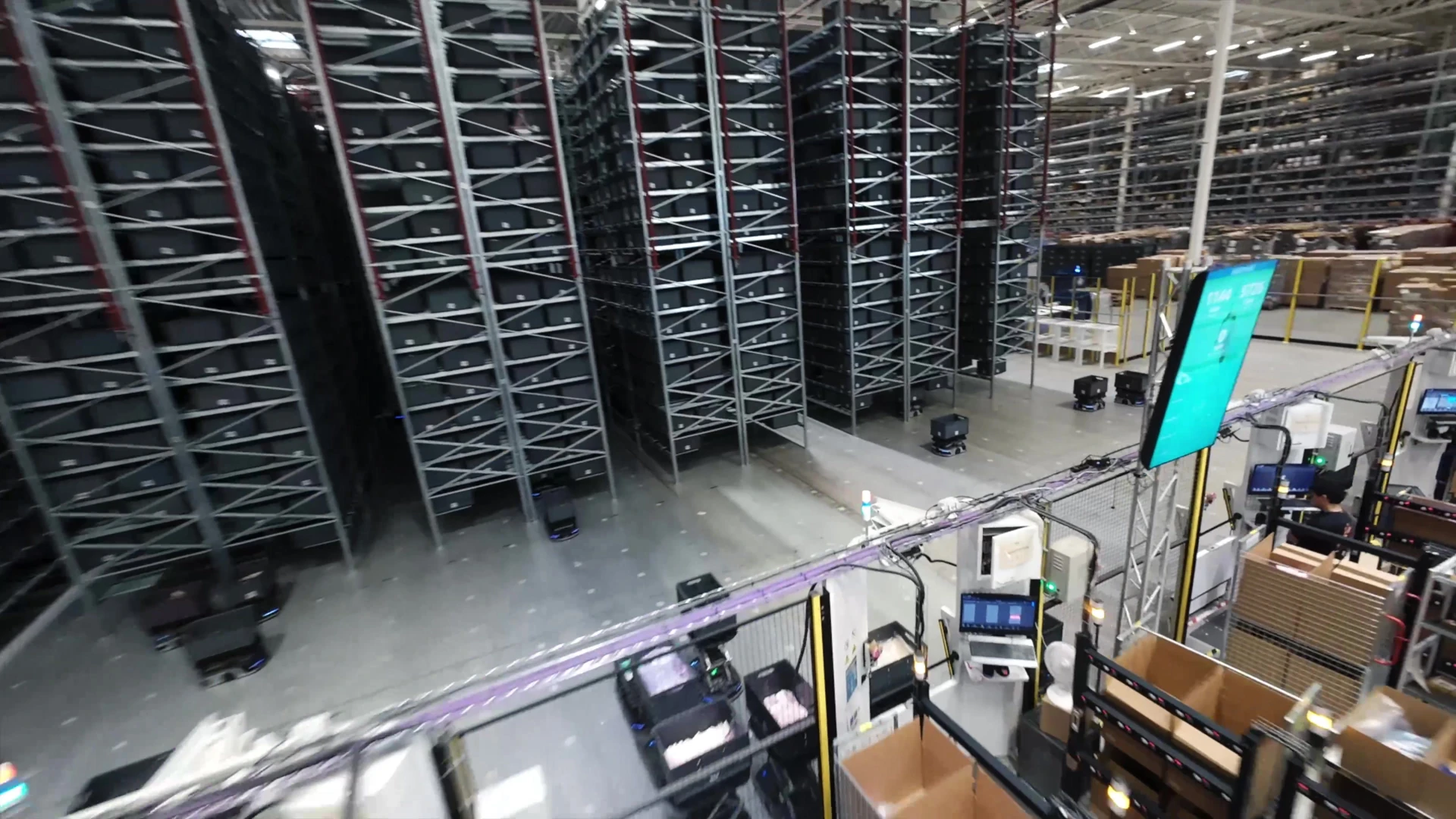
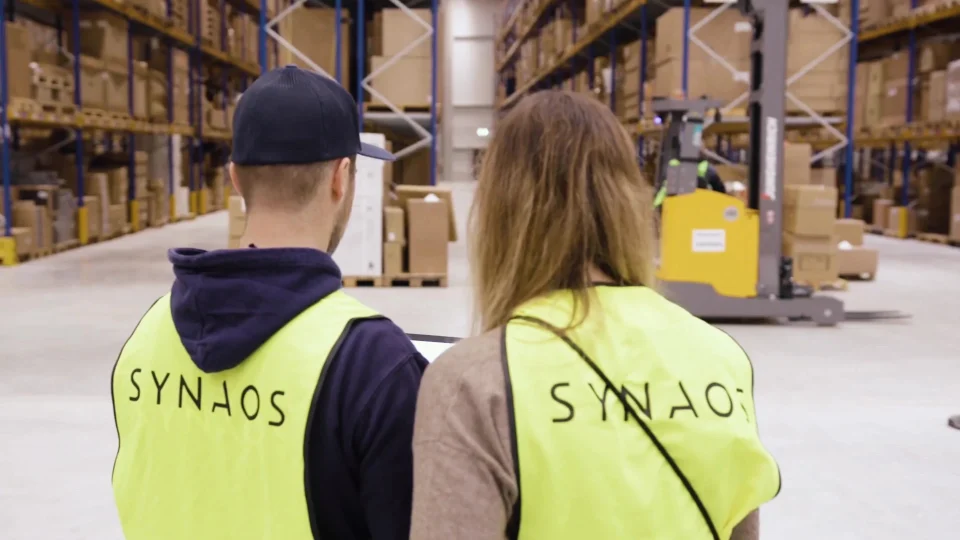
Live storage and picking operation seen during the My Jewellery site tour. Frame from the source recording.
An automation site visit can make an unfamiliar technology tangible. Robots, workstations and storage stop being separate items in a presentation and become a process that people can watch. In the recorded Geek+ tour at My Jewellery, visitors repeatedly identify that practical experience as the value of attending.
But a working installation is a starting point for evaluation, rather than a substitute for it. The most useful visit connects what is visible to the operating requirements of the team considering an investment.
Start with the process you want to understand
In the tour, Geek+ explains that visitors can see the system in operation and hear from the customer using it. That combination is valuable because a product demonstration and a working process answer different questions.
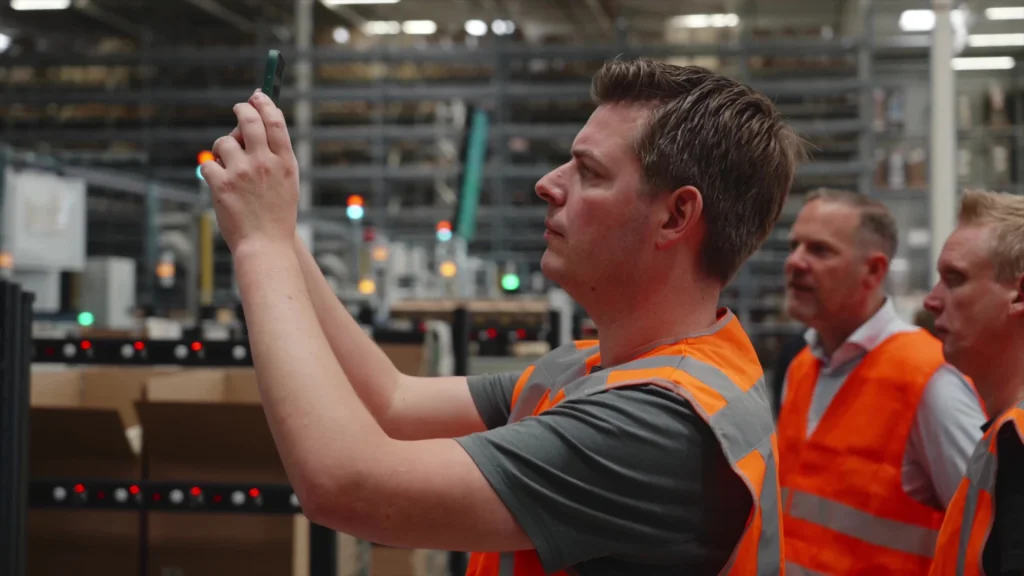
Visitors watching a demonstration during the My Jewellery automation tour. Frame from the source recording.
Before attending, define the part of your own operation that is difficult to understand from a proposal. It might be the movement of totes, the work performed at a picking station or the relationship between storage and inbound activity. This is an editorial recommendation based on the tour’s emphasis on seeing real products and people at work.
A clear question makes it easier to distinguish a relevant observation from an impressive but unrelated one. A fast robot passing a camera does not by itself explain how an entire order is completed.
Watch the work around the robot
One visitor comments on the speed of the AMRs. Others emphasise seeing a clean, smoothly operating warehouse and hearing the host customer’s experience. The film captures confidence building through direct observation.
During a visit, pay attention to the interfaces as well as the machine. Where does an employee receive the work? What information is visible at the station? Where do goods enter and leave the process? Which activities remain manual?
These questions help describe the operating model without assuming that every benefit comes from robot speed. They also make the visit more useful for colleagues who could not attend and need a clear account afterwards.
Ask the host about the learning period
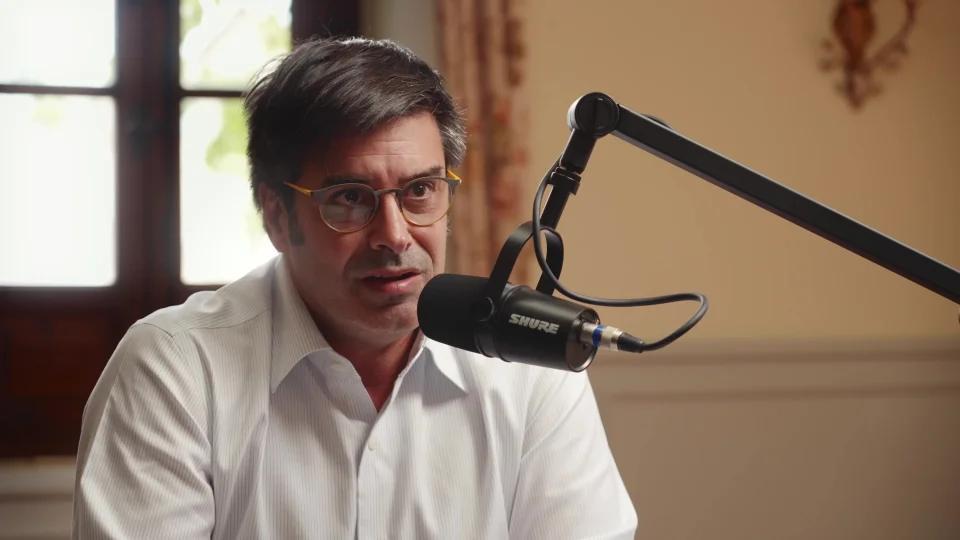
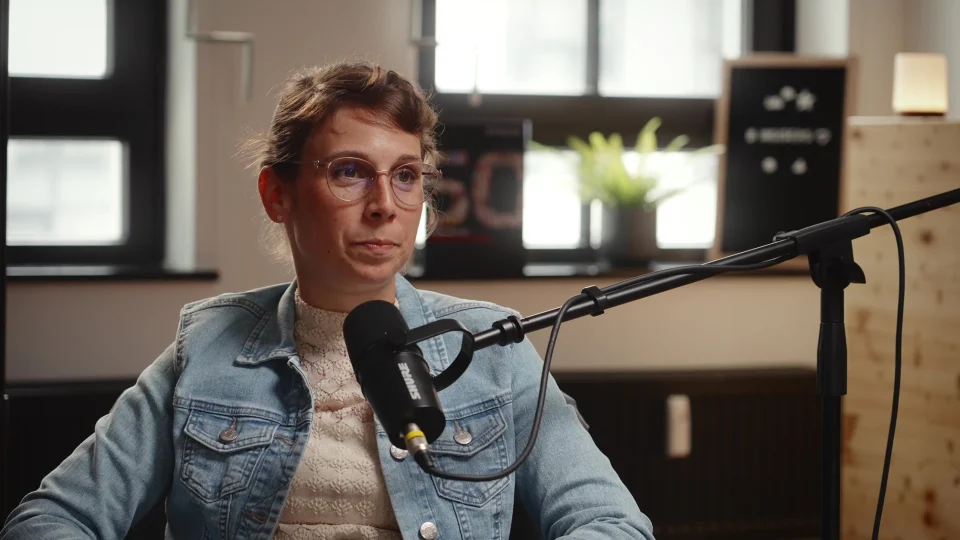
The tour highlights the opportunity to hear lessons learned from My Jewellery. That is an important distinction: the host has lived through preparation, implementation and daily operation, while a visitor sees only a short period.
Useful discussion topics include what changed for operators, which assumptions proved accurate and what the team would investigate earlier in another project. The recording does not provide a complete set of answers to those questions, so this article does not invent them on the host’s behalf.
If performance figures are discussed, ask what the figure measures, which period it covers and what conditions shaped it. A peak, an average and a planned output can all be informative, but they are not interchangeable.
Compare the conditions before transferring the conclusion
A visitor in the film says seeing an idea work in practice helps them picture their own operation. That is a useful result of a tour. The next step is to identify what is comparable and what differs.
Prepare a short comparison covering products, order profiles, working hours and the processes connected to the system. The purpose is not to disqualify a successful reference site. It is to make clear which observations may transfer and which require additional investigation.
The tour alone does not disclose the project’s complete commercial model, implementation effort or long-term operating dataset. Those belong in subsequent discussions supported by the relevant evidence.
Leave with an evidence brief
A practical visit summary can contain the process observed, two or three lessons from the host, the assumptions that still need testing and the follow-up information required. This proposed format is an editorial tool, not a form used by My Jewellery in the recording.
The strongest outcome is a better-defined decision. Seeing a live warehouse can build confidence; documenting what was learned makes that confidence easier to assess.
Questions answered
Is a site visit useful for a first automation project? The tour participants describe it as a way to understand the system and hear directly from an operating customer.
Does a successful reference site prove the same outcome elsewhere? No. The conditions and performance evidence still need comparison.
What should the visit produce? A clear account of the process, lessons learned and questions that remain open.
Free membership
Keep reading — it’s free.
Join with your company email to read every case study, interview and article in full. No payment, no card.