ARME archive: coordinating robots, forklifts and the work between them
The recorded session places robot fleets inside a wider material-flow system involving people, driven trucks and infrastructure.
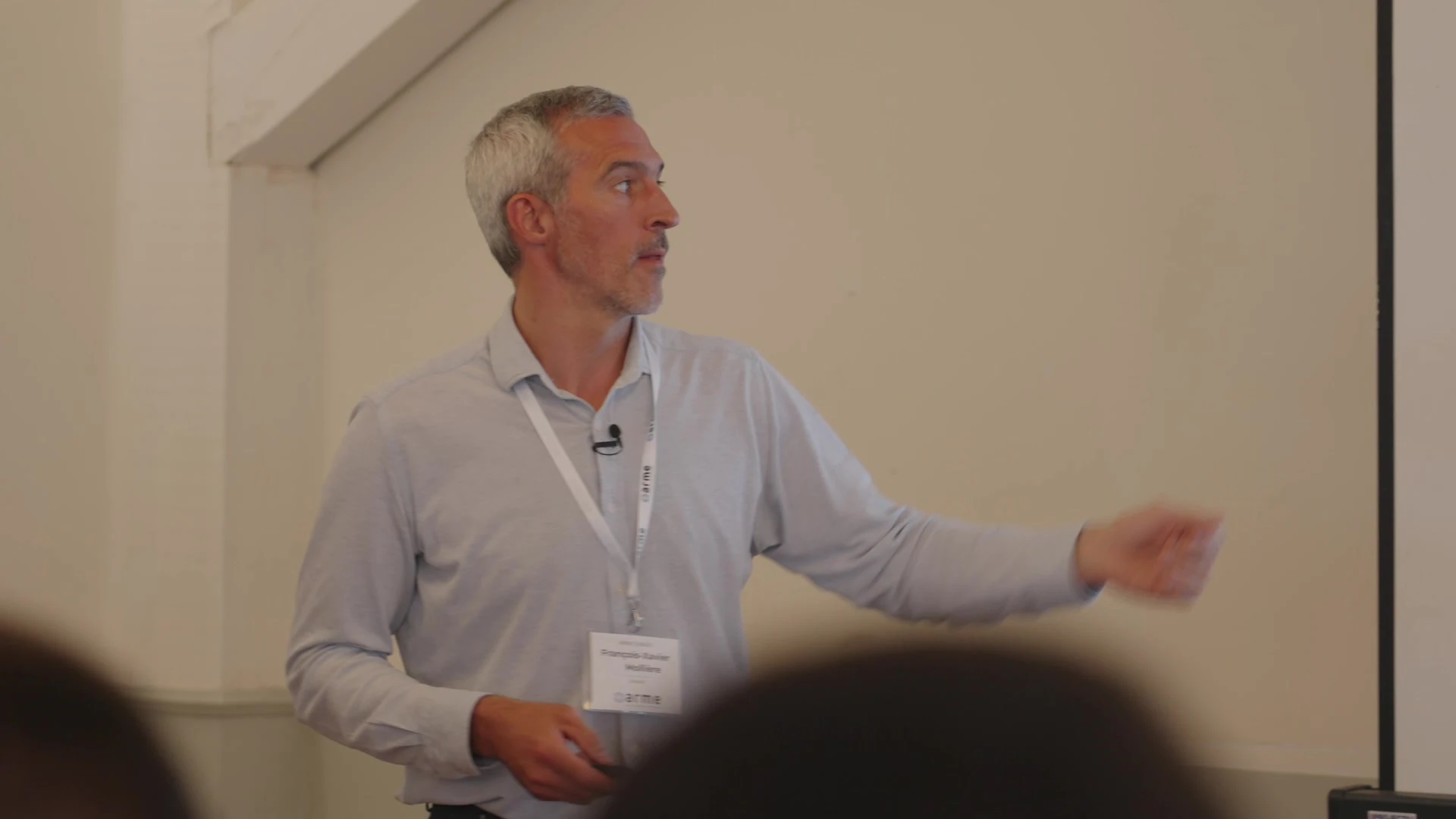
The archived SYNAOS presentation at ARME addresses a problem that can emerge after several separate automation decisions: resources may each work locally while the overall flow becomes harder to coordinate.
The session is catalogued in the 2024 Logroño archive. This recap reports the approach presented at that event, without treating its product descriptions, customer examples or market figures as current independently verified facts.
Separate purchases can create a shared operating problem
The presenter describes buying automated vehicles from different suppliers and later discovering that their systems need to work across overlapping areas. Adding another layer may connect some functions while also adding infrastructure and responsibility.
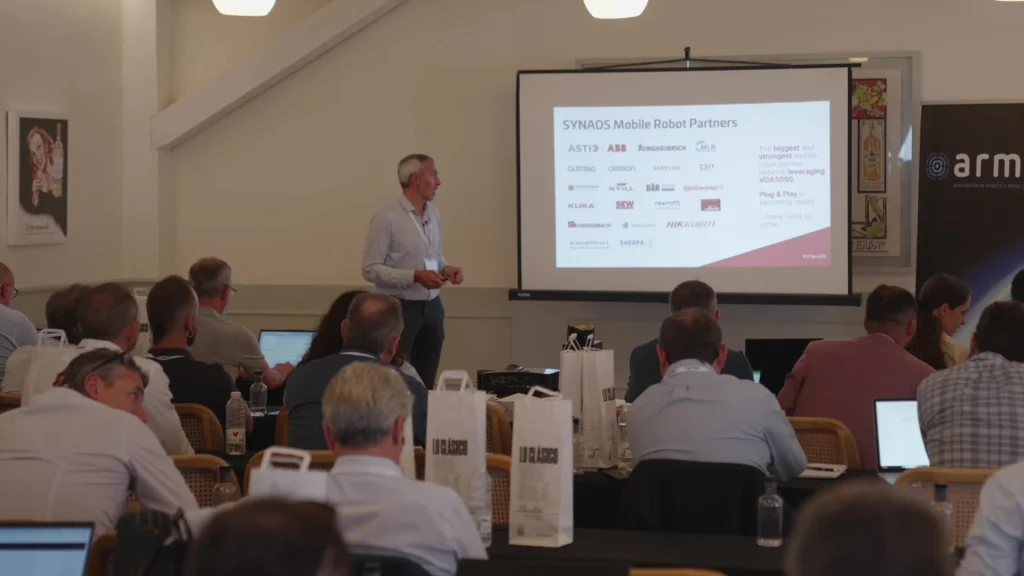
SYNAOS presents central coordination as its preferred response. That is the supplier’s architecture argument, rather than proof that every alternative is unsuitable.
The useful starting question is what happens when otherwise separate processes need to share a route, a resource or a handover point.
The resource pool extends beyond mobile robots
The talk includes driven forklifts and people alongside AGVs and AMRs. It describes receiving work from warehouse systems or other triggers and directing that work towards available resources.
For manual trucks, the presentation also discusses the information needed to locate and guide them. This places data availability inside the coordination problem rather than assuming that every resource is already equally visible.
The source does not provide a complete technical configuration for another site, and the recap does not infer automatic compatibility with arbitrary equipment.
Communication needs testing at the intended scope
The presenter explains onboarding work around receiving, understanding, executing and reporting information. The session explicitly distinguishes that process from an official certification.
That qualification matters. A supplier’s compatibility or onboarding programme and formal conformity of a complete application are different claims. The recording does not establish the latter for every system discussed.
The archive also contains demonstration examples. They should not be treated as production validation simply because several vehicle brands appear together in one area.
Keep operating evidence separate from demonstration evidence
A demonstration can make an architecture understandable, while a live customer installation can provide a different kind of evidence. The presentation discusses both, but the recap does not combine their scales or repeat unsupported claims of unlimited capacity.
Similarly, historical computation rates, fleet totals and proposed implementation durations are omitted because their scope would need additional verification before being used as current benchmarks.
What the session contributes
The event recording is most useful as a way to understand the relationships between work orders, resource information, communication and integration responsibility.
For an industrial reader, the next questions concern the actual interactions needed at a site and the evidence supporting them. The central message of the archived presentation is that introducing equipment and coordinating an operation are connected tasks, with integration work required between the two.